
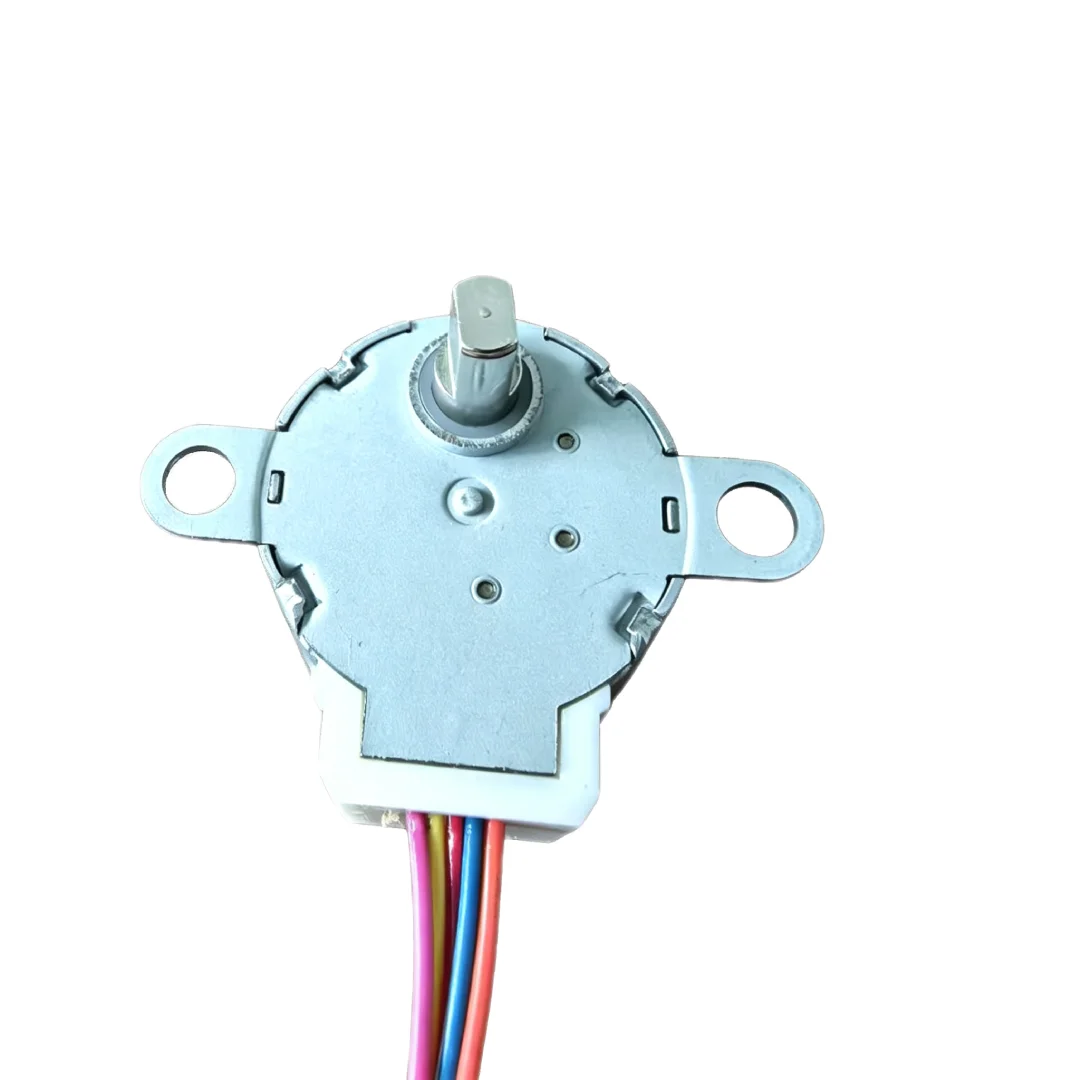
1. Direct Answer
Stepper motor noise is usually not a sign of a faulty motor: because the motor moves in discrete magnetic steps, a certain amount of sound and vibration is inherent to its operation. Excessive noise, however, normally comes from four sources — driver settings, resonance, mechanical installation and load or speed mismatch. Check them in that order and most noise problems can be traced and reduced without replacing the motor.
Short version: some noise is normal, sudden or heavy noise is not. Verify the driver current against the rated specification, tune microstepping, tighten and align the mounting, move the operating speed away from resonance, and confirm the load is within the torque the motor can actually deliver.
2. Why Do Stepper Motors Make Noise?
In short: a stepper motor moves by switching its magnetic field in discrete steps, so a small amount of stepper motor noise is inherent; how much you hear depends on the design, the driver, the speed, the load and the installation.
A controller sends an electrical pulse to the driver, and the driver energises the motor windings in a particular order. Each change of the magnetic field shifts the rotor from one position to the next, and during this process some level of vibration and noise is produced.
Motors designed for continuous rotation can run smoothly, but a stepper motor is built to move a shaft in discrete increments. Even small variations in torque and magnetic field strength can therefore create audible sound.
Step-pulse frequency (Hz) = steps per revolution × speed (rpm) ÷ 60. Example: 200 steps/rev at 300 rpm → 1,000 Hz, which sets the dominant electromagnetic tone.
The amount of noise produced by a motor depends on its design, driver, speed, load and installation location — the four areas examined in the following sections.
3. Which Driver Settings Cause Stepper Motor Noise?
In short: the driver shapes the current pulses and is the first place to look for stepper motor noise: a current set too high adds heat and vibration, a current set too low starves the motor of torque, and the microstepping mode decides how smoothly the movement sounds.
The motor driver plays a central role in stepper motor operation. Incorrectly set current results in poor motor performance: too much current increases heat and vibration, while too little current leaves the motor without sufficient torque for the task.
Microstepping can also affect how smoothly the motor moves and how much noise it produces, but the result depends on the motor–driver combination rather than on the microstep setting alone.
Driver setting | If set incorrectly | What to do |
Current too high | More heat and more vibration | Set the current to the manufacturer’s rated specification |
Current too low | Insufficient torque, stuttering or missed steps | Raise the current until the load is handled reliably |
Microstepping mode | Coarse steps sound rough; benefits vary by motor–driver pair | Choose a suitable microstep mode and test on the real load |
3.1 How Should You Set the Driver Current?
In short: follow the motor manufacturer’s electrical guidelines and use no more current than the application needs.
Always adhere to the manufacturer’s electrical guidelines and set up the driver accordingly. Do not use more current than necessary — the quietest setting is the lowest one that still delivers the required torque.
4. Why Does the Motor Resonate at Certain Speeds?
In short: at specific speeds the motor’s natural vibration couples into the mechanical system, which amplifies stepper motor noise, causes visible shaking and can reduce movement stability.
When the motor operates at certain speeds, natural vibrations are transmitted to the mechanical system. The interaction makes the motor appear louder and can produce noticeable shaking; resonance may also affect movement stability.
Microstep positions per revolution = steps per revolution × microstep setting. Example: 200 × 16 = 3,200 commanded positions per revolution.
Several measures help: test different operating speeds, adjust the acceleration rate, and use a driver with proper microstepping options. Running the application above or below the resonant band is often the simplest fix.
5. Can Installation Problems Be the Real Noise Source?
In short: some stepper motor noise does not come from the motor at all — loose screws, an unsuitable coupling, poor alignment or a vibrating support structure make the whole system noisier than the motor itself.
During use of the equipment, several factors can contribute to increased noise: a loose mounting screw, a coupling that does not suit the application, poor alignment of components, or a support structure that vibrates. When the motor shaft and the connected mechanism are misaligned, the system undergoes more physical strain.
Installation check | What can go wrong | What to verify |
Mounting surface and screws | Loose fasteners let the motor rattle | Tighten bolts to a consistent, even torque |
Coupling selection | A coupling not suited to the application transmits shock | Match the coupling type to load and speed |
Shaft alignment | Misalignment adds mechanical strain | Align motor shaft and driven mechanism |
Support structure | A vibrating frame amplifies motor noise | Check the base for rigidity and damping |
While installing the unit, check the mounting surface, the fasteners, the shaft connection and the mechanical alignment with the other components in the system.
6. What Happens When the Load Exceeds the Motor’s Torque?
In short: without enough torque margin the motor can shake, miss steps or run inconsistently, and sudden load changes also destabilise movement. Load problems are a frequent hidden source of stepper motor noise.
A stepper motor needs sufficient torque to move its load. If the applied mechanical force is too large for the motor’s torque capability, the motor may begin to shake, miss some steps, or operate inconsistently.
Sudden load changes affect movement stability as well. Evaluate the actual operating load of your application instead of choosing a motor because it looks large enough — this is also why holding torque alone never tells the full story.
7. Is the Operating Speed and Environment Within Limits?
In short: available torque falls as speed rises, and running outside the recommended temperature range makes the motor noisier or lose synchronism with the incoming pulses.
The available torque of a stepper motor varies with its operating speed, and in many cases it decreases as speed increases. When a motor operates outside its recommended temperature limits, it will either generate more stepper motor noise than usual or fall out of sync with the pulse signals.
Angular speed ω (rad/s) = speed (rpm) × 2π ÷ 60. Example: 600 rpm ≈ 62.8 rad/s — useful when comparing datasheet speeds stated in different units.
A practical way to solve this is to run the motor at various speeds and accelerations while it is subjected to its typical operational conditions.
8. Does a Noisy Stepper Motor Mean It Is Faulty?
In short: not necessarily — some noise is expected because the motor moves in discrete steps, but knocking, heavy vibration, irregular movement or a sharp increase in noise deserve investigation.
Some noise is inherent to operation through alternating magnetic fields and stepwise movement. However, sudden changes in sound deserve attention: unusual sounds such as knocking, a high level of vibration, irregular movements or a sharp increase in noise can indicate mechanical or electrical issues.
Do not assume that every noisy motor has the same cause — compare the symptoms against the checks below before replacing anything.
8.1 Which Checks Matter When the Sound Suddenly Changes?
Work through the following items in order:
- Verify the driver settings against the motor’s rated specification.
- Check the power supply voltage and its stability.
- Inspect the motor connections and wiring.
- Re-examine the mounting structure, fasteners and alignment.
- Confirm the operating load has not changed.
- Compare the observed behaviour with the manufacturer’s specifications.
9. How Do You Reduce Noise and Choose a Quieter Motor?
In short: work through the driver current, microstepping, mechanical mounting, speed window and load in that order — and if quiet operation is a key requirement, evaluate the total system before purchasing.
9.1 How Do You Reduce Stepper Motor Noise Step by Step?
After identifying the possible cause, take these practical steps:
- Check the driver current and adjust it to the motor’s rated specification; do not use more current than you need.
- Adjust the microstepping options to smooth the movement — noting that finer microstepping does not automatically mean more accurate positioning under every load.
- Review the mechanical mounting: tighten loose bolts, verify shaft alignment and confirm there is no undue friction or vibration from connected parts.
- Choose a suitable operating speed and stay away from speed ranges with strong resonant vibration; adjust acceleration and deceleration as appropriate.
- Verify the load: ensure the motor produces adequate torque to start, to run and to handle load changes.
These steps will reduce stepper motor noise in most applications, but the optimal solution is always based on the entire motor system, not on a single component.
9.2 Which Factors Matter When Choosing a Quieter Motor?
If noise is a critical requirement, evaluate the following factors before you decide:
Selection factor | What to confirm |
Motor design | The design significantly affects vibration and noise levels |
Torque requirements | The motor can handle the actual load, with margin |
Operating speed | The motor performs across the specified speed range |
Driver compatibility | A suitable driver and control method are available |
Installation conditions | Mounting structure, alignment and possible mechanical vibration |
Working environment | Any specific noise or temperature conditions of the device |
You may also want to contact your motor manufacturer — for example Changzhou Xinghua Electric Co., Ltd. — for product specifications, and run tests under conditions similar to the end-use environment.
10. FAQ
Are stepper motors naturally noisy?
Yes, some stepper motor noise is expected because they move in discrete steps, but how much you hear depends on the motor type, the driver, the speed, the load and the installation.
Can microstepping reduce stepper motor noise?
Yes, it can improve motion smoothness and reduce vibration, but the final result depends on both the motor and the driver being used.
Why does my stepper motor vibrate at a certain speed?
The motor may be operating at a resonance point. Test different speeds and adjust the acceleration profile to move away from that band.
Can an overloaded stepper motor make more noise?
Yes. Too much load can make the motor vibrate, run unevenly or even miss steps.
Should I lower the current to make the motor quieter?
Not below what the load requires. A current set too low starves the motor of torque and can cause stuttering or missed steps.
How can I check whether a stepper motor is working normally?
Verify movement, operating temperature, noise level, workload, electrical connections and driver configuration, then compare against the manufacturer’s specifications.
11. Conclusion
Stepper motor noise and vibration can result from driver configuration, resonance, poor installation, excessive load or an unsuitable operating speed. Because a certain amount of sound is inherent to stepwise operation, the goal is to separate normal noise from warning signs — and to act on the cause rather than the symptom.
By systematically evaluating each element above, engineers can ensure motors operate optimally. When choosing a stepper motor, look beyond speed and torque to the driver, the mechanical construction and the operating environment.
Changzhou Xinghua Electric Co., Ltd. provides documentation for customers seeking motor options. To view the full line of stepper motor products, visit czxhmotor.com, or contact the company’s staff to determine which product best suits your application requirements.