
What Is a BYJ Stepper Motor?
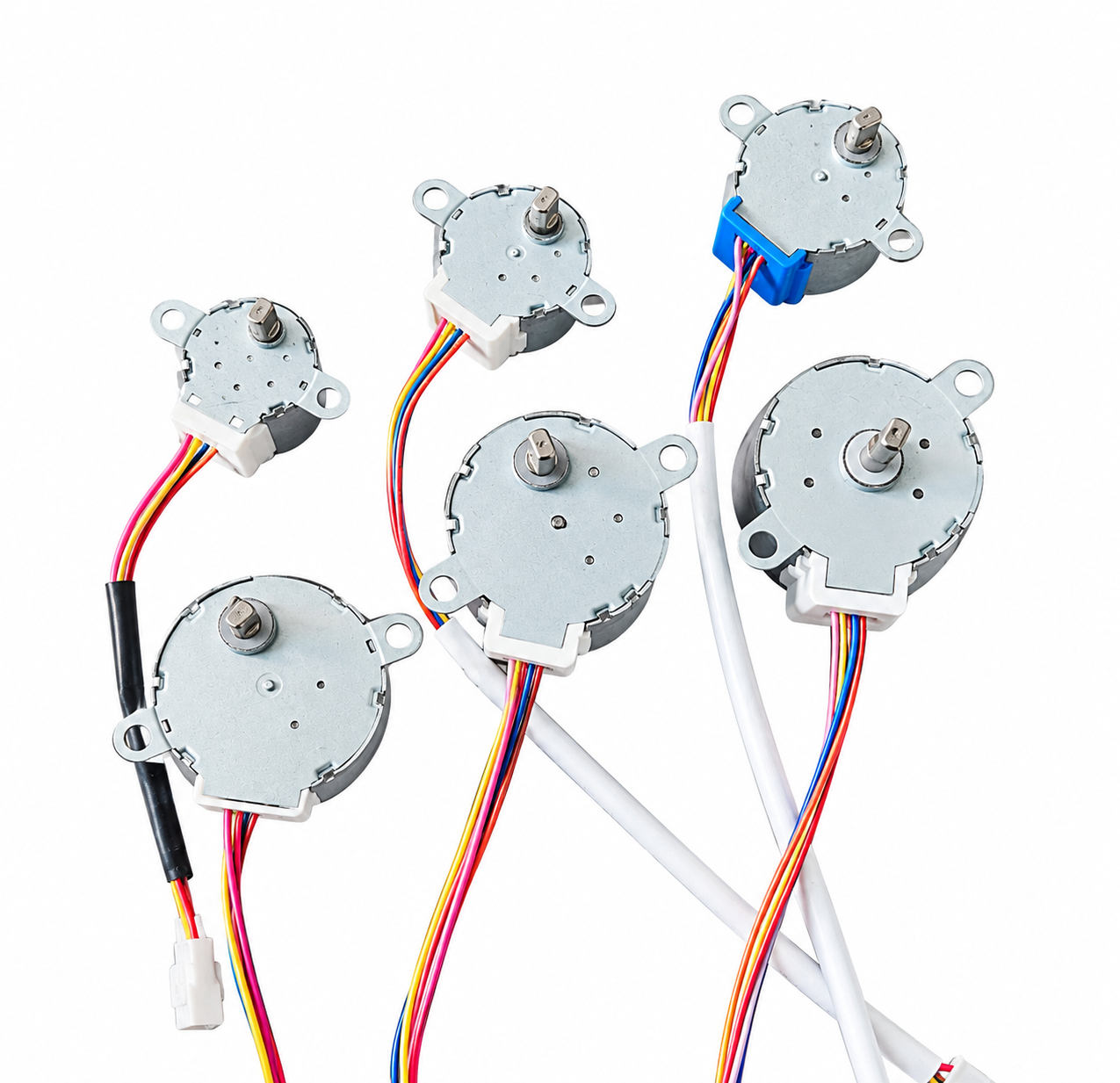
A BYJ stepper motor is a small permanent magnet stepper motor. Makers usually pair it with a reduction gearbox.
The motor moves in fixed increments. Each electrical pulse produces one step. That gives compact devices controlled and repeatable motion.
Most BYJ designs combine two parts:
- A permanent magnet stepper motor.
- A reduction gearbox.
Together they deliver slow output speed and higher output torque in a small package.
Unlike a brushed DC motor, a stepper motor does not simply spin when you apply power. The driver energizes the windings in a set order. That order sets both direction and distance.
Key characteristics include:
- Incremental rotary movement.
- Controlled rotation direction.
- Speed you adjust through the drive signal.
- A compact mechanical structure.
- Compatibility with several transmission designs.
“BYJ” names a family, not one fixed product. Voltage, gear ratio, torque, step angle, dimensions and wiring all vary between models. Always read the datasheet for the exact model you plan to buy.
How Does a BYJ Stepper Motor Work?
The controller sends step and direction signals to a driver. The driver energizes the motor windings in sequence.
Each energized winding creates a magnetic field. That field pulls the rotor to the next position. Repeating the sequence turns the shaft.
A BYJ stepper motor moves only when the driver energizes its windings in the correct order. Wiring errors and wrong excitation sequences are common causes of a motor that hums but does not turn.
How Do Step Signals Control Motor Movement?
Pulse count sets the commanded distance. Pulse frequency sets the speed.
In practice:
- More pulses move the shaft further.
- A higher pulse frequency moves it faster.
- Changing the excitation sequence reverses the direction.
Step angle and gear ratio decide the real output motion. In a geared motor the output shaft turns slower than the internal rotor. That suits equipment that needs controlled, slow movement.
Why Is Gear Reduction Important?
A reduction gearbox trades speed for torque. A higher reduction ratio lowers output speed and can raise output torque, within the limits of gear efficiency and gear strength.
In a BYJ stepper motor, the gearbox sets the balance between speed and torque. That is why two models with the same motor can behave very differently at the output shaft.
A larger ratio is not automatically better. Check backlash, gear strength, noise, efficiency and duty cycle before you choose.
For an ideal system with no losses:
Output Speed = Motor Speed ÷ Gear Ratio
Real output speed sits below that value, because friction and mechanical losses reduce it.
For deeper technical background, see Oriental Motor’s Introduction to Stepping Motors.
What Factors Should You Consider When Selecting a BYJ Stepper Motor?
Rated voltage is only one input. Selecting a BYJ stepper motor means matching six factors together, because they interact.
What Torque Does Your Application Require?
Torque decides whether the motor can move your load. Size the BYJ stepper motor from the load, not from the part number.
Include these inputs:
- Load weight.
- Mechanical friction.
- Transmission resistance.
- Acceleration requirements.
- Start and stop conditions.
Do not select on holding torque alone. Holding torque is the torque needed to turn the shaft while the windings are energized but the shaft stands still. It does not describe the torque the motor delivers while running.
Check torque at your actual operating speed. The available torque should exceed the maximum torque your mechanism needs.
What Output Speed Do You Need?
A trim mechanism needs slow, controlled motion. A feeding mechanism needs a faster cycle. Your BYJ stepper motor must meet the cycle time, not a catalogue headline.
Compare these values:
- Rated output speed.
- Starting frequency.
- Running frequency.
- Acceleration and deceleration needs.
- Gear reduction ratio.
Output shaft speed matters more than internal rotor speed in your final design.
Which Operating Voltage Is Suitable?
The rated voltage must match your electrical design. Common BYJ configurations include 5 V, 12 V and 24 V options.
Every BYJ stepper motor carries a rated voltage and a winding resistance. Never assume a motor runs safely at any voltage.
Check these items:
- Rated voltage.
- Winding resistance.
- Rated current.
- Driver output characteristics.
- Power supply stability.
A poor match between motor and driver causes missed steps or overheating.
What Step Angle and Gear Ratio Do You Need?
The step angle sets the angular movement per step. The gear ratio scales that movement at the output shaft. Both drive your positioning resolution.
The step angle and gear ratio decide how far a BYJ stepper motor moves per input pulse. For repeated moves between two fixed points, calculate steps per unit of travel instead of relying on the raw step count inside the motor.
Also check gearbox backlash. Backlash reduces positioning accuracy, especially in mechanisms that reverse often.
Do the Motor Dimensions Fit Your Equipment?
Dimensions decide feasibility in compact equipment. A BYJ stepper motor can meet your torque and speed targets and still fail on fit.
Check these points before you design the housing:
- Body diameter and length.
- Mounting hole positions.
- Shaft diameter and length.
- Output shaft shape.
- Connector position.
- Available installation space.
Request the latest dimensional drawing before you finalize the design.
What Operating Environment Will the Motor Face?
Environment affects performance and service life. Consider these conditions:
- Ambient temperature.
- Operating duration.
- Start-stop frequency.
- Vibration.
- Dust and moisture exposure.
- Available heat dissipation.
Heat shortens the life of a BYJ stepper motor. Buyers in Japan, South Korea and Southeast Asia often face high ambient humidity, so confirm the temperature range and protection rating for the exact model instead of assuming the whole BYJ family shares one rating.
How Do You Choose a BYJ Stepper Motor Step by Step?
Use this six-step order. It reduces design changes and repeated testing.
Step 1: Define Your Application
Write down what the motor must move. Examples include a rotary adjustment mechanism, a small valve actuator, an instrument positioning assembly and an automated feeding mechanism. Describe the movement, the load and the operating cycle.
Step 2: Calculate the Required Torque
Estimate load torque and friction. Add acceleration torque if the mechanism starts and stops often. Do not size from maximum holding torque alone.
Step 3: Determine the Required Output Speed
Calculate how fast the connected part must move. Include start, stop and reversal time. Compare the result with the motor’s speed-torque curve.
Step 4: Confirm Electrical Compatibility
Verify voltage, resistance, current, winding configuration and driver specifications. Confirm the wiring sequence before you connect power.
Step 5: Check Mechanical Compatibility
Compare the motor drawing with your equipment design. Check the shaft, mounting holes, body dimensions and connection method.
Step 6: Test the Motor in Your Actual Application
Datasheets narrow the choice. Testing confirms it. Run the motor under representative load, temperature and duty cycle.
Evaluate these results:
- Starting performance.
- Running stability.
- Noise and vibration.
- Temperature rise.
- Direction changes.
- Positioning consistency.
For sizing help, see Oriental Motor’s Motor Sizing Calculations.
Which Applications Use BYJ Stepper Motors?
Use a BYJ stepper motor where a mechanism needs controlled, periodic or slow motion. Final suitability depends on the exact model and the mechanical design.
- Home appliances: internal adjustment mechanisms and rotating dial controls.
- Instrumentation: small positioning assemblies, indicators and adjustment mechanisms.
- Vending and office equipment: repeated motion and coordinated operating sequences.
- Valve and actuation systems: opening, closing or adjusting a rotary mechanism.
- Surveillance and smart devices: small movement systems with controlled positioning.
One model rarely serves two applications equally well. A valve actuator usually needs more torque. An instrument mechanism usually needs better position holding. Evaluate the full requirement before you pick a model.
How Do Different BYJ Motor Configurations Compare?
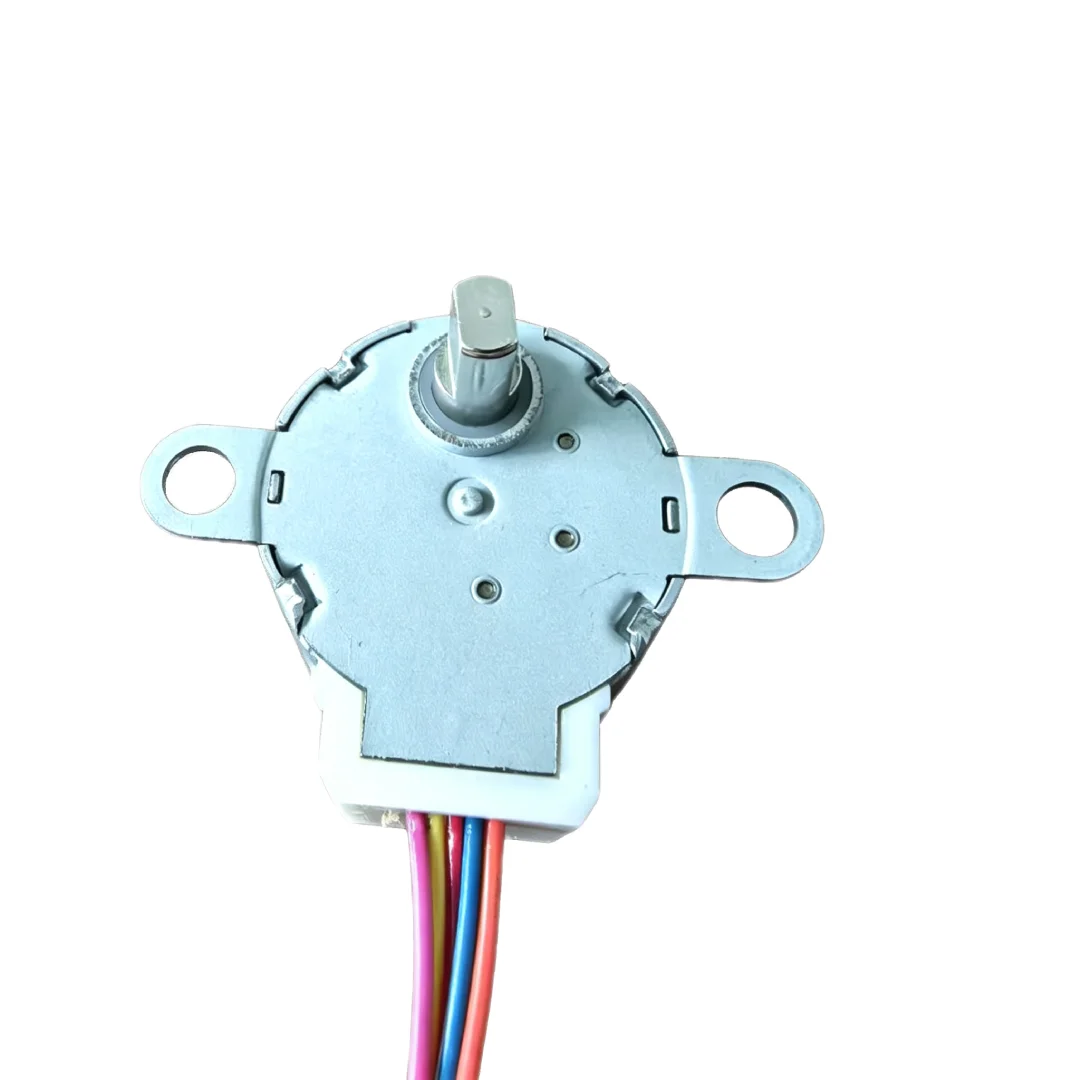
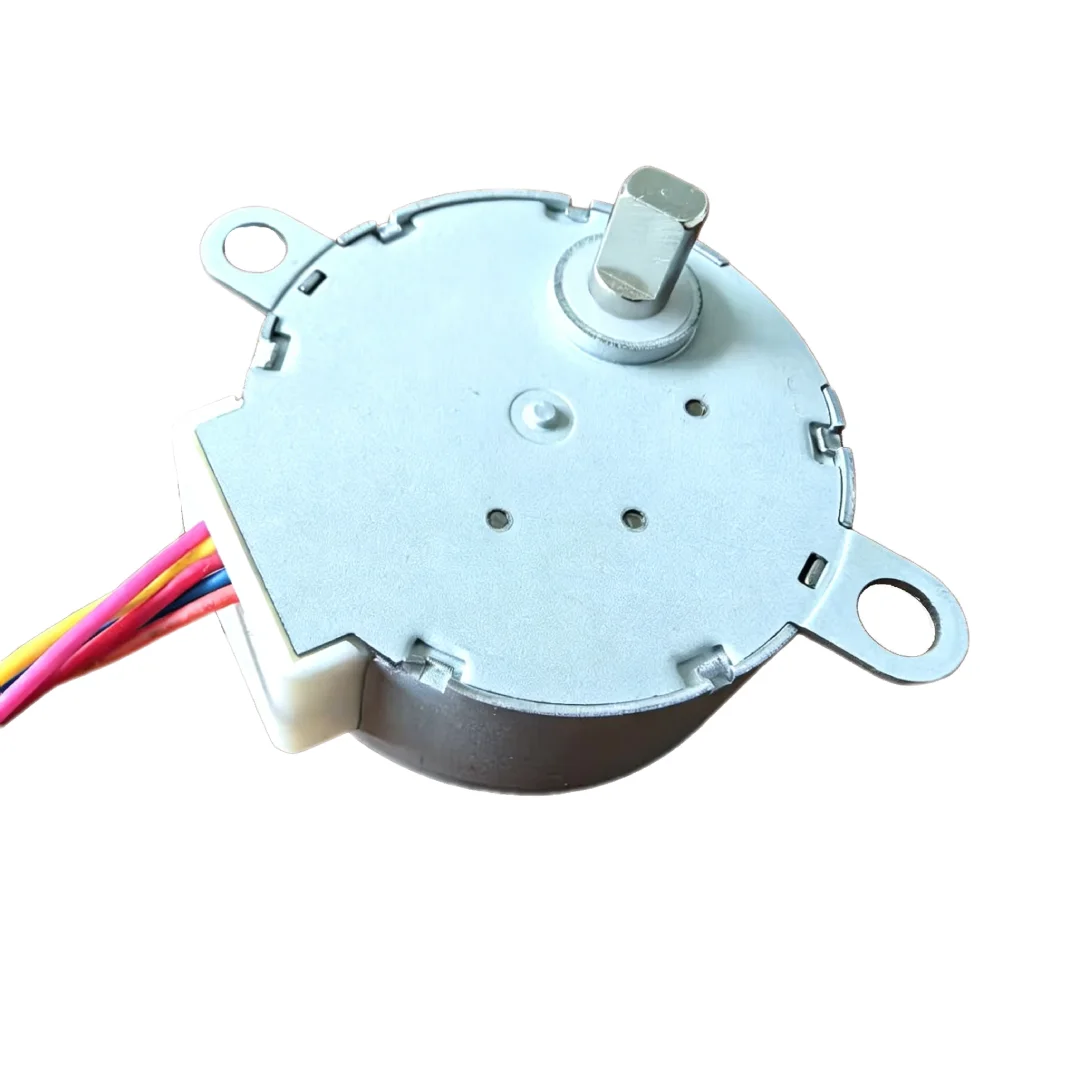
BYJ models differ in electrical and mechanical parameters. The table below compares two common models. Source: Changzhou Xinghua Electric product data. Verify every figure before you publish or buy.
Parameter | 24BYJ48 | 35BYJ46 |
Rated voltage options | 5 V / 12 V / 24 V | 5 V / 12 V / 24 V |
Resistance options | 20–380 Ω | 20–300 Ω |
Listed torque options | 29.4–198 mN·m | 58.8–347 mN·m |
Listed step angle | 5.625°/32, /64, /85, /16, /25 | 7.5°/130, /85, /43.75, /30, /15, /9 |
Insulation class | E | E |
Noise level | Listed below 35 dB | Listed below 40 dB |
These values describe configuration options. They do not guarantee performance for every individual unit.
One BYJ stepper motor family can include several voltage and resistance options, and listed torque changes with configuration and test conditions. A model name is not a specification.
Confirm these items before you order:
- Exact model number.
- Rated voltage and winding resistance.
- Torque and test conditions.
- Step angle and gear ratio.
- Output shaft and mounting dimensions.
- Wiring and connector requirements.
What Common BYJ Stepper Motor Selection Mistakes Should You Avoid?
Most selection problems appear only after installation. Avoid these five.
Selecting by model number alone. Two versions of one family can carry different electrical parameters. Confirm the full configuration.
Ignoring operating torque. A motor can hold position and still fail to run your load at speed.
Choosing the wrong driver. The driver must match the winding arrangement. Wrong wiring or excitation sequences stop normal operation.
Ignoring installation dimensions. A motor that does not fit adds engineering cost. Confirm the drawing before production.
Skipping application testing. Identical specifications do not guarantee identical field performance. Test under real load, temperature and duty cycle.
How Do You Choose a Reliable BYJ Stepper Motor Supplier?
Supplier choice is part of motor selection. A reliable supplier helps you confirm that a BYJ stepper motor fits your application, and gives you accurate data instead of a part number.
Who Should Use This Selection Guide?
This guide suits design engineers, purchasing staff and product managers who specify small motion control for home appliances, instruments, vending equipment, valve actuators and smart devices. It also helps overseas buyers who must explain application requirements to a factory in writing.
Evaluate suppliers on these points:
- Product documentation: are datasheets and dimensional drawings available?
- Configuration range: can the supplier offer the voltage, torque and structure you need?
- Technical communication: does the supplier understand your application?
- Sample evaluation: can you obtain samples for engineering verification?
- Production consistency: does the manufacturer describe its quality control and inspection process?
- Order clarity: can the supplier state specifications, lead time and order requirements clearly?
Clear technical communication matters more for overseas buyers in Japan, South Korea and Southeast Asia, where questions often arrive across time zones and languages.
About Changzhou Xinghua Electric Co., Ltd.
Changzhou Xinghua Electric Co., Ltd. develops, designs and produces small electric motors. Its product line covers small stepper motors, synchronous motors, geared motors and related motor solutions.
The company lists several BYJ models on its website, including 28BYJ48, 30BYJ46, 35BYJ46 and 35BYJ412P. Buyers comparing options can review the full line before they request a quotation.
BYJ stepper motor product range
If you are developing a new device, prepare your application description and technical specifications before you ask for a recommendation. That shortens the selection cycle and reduces sample rounds.
Official website:https://czxhmotor.com/
Frequently Asked Questions
What Is the Main Purpose of a BYJ Stepper Motor?
It provides controlled step-by-step motion in compact devices. Typical uses include rotating a part, holding a position and actuating a small mechanism.
Is a BYJ Stepper Motor Suitable for Continuous Operation?
It depends on the model, the load, the drive method and the thermal conditions. Check the manufacturer’s duty cycle and temperature rise limits before you specify continuous running.
How Is a BYJ Stepper Motor Different From a Standard Stepper Motor?
Most BYJ models pair a permanent magnet motor with a compact gearbox. The gearbox lowers output speed and raises output torque, but the exact design varies by model.
How Do I Calculate the Output Speed of a Geared Stepper Motor?
Divide the motor speed by the gear ratio. Real output speed sits below that value, because friction and mechanical losses reduce it.
Can I Drive a BYJ Stepper Motor With an Arduino Board?
Many BYJ configurations work with an Arduino-based controller. You need a compatible driver, correct wiring and the right excitation sequence. Check the winding arrangement first.
How Do I Know Whether a BYJ Stepper Motor Has Enough Torque?
Calculate load torque, friction and acceleration torque. Then compare the total with the torque available at your operating speed. Do not rely on holding torque alone.
Can Manufacturers Customize a BYJ Stepper Motor?
Customization depends on the manufacturer’s options and capacity. Ask about voltage, output shaft, gear ratio, mounting size and connectors.
What Information Should I Send When Requesting a BYJ Stepper Motor Quotation?
Send the intended application, required voltage, required torque, desired speed, installation dimensions, operating cycle and estimated quantity. A drawing or sample helps the supplier assess the fit.
Conclusion
Choose the BYJ stepper motor from your application, not from the datasheet headline. Start with load, output speed, torque, supply voltage, positioning accuracy and installation size. Then compare configurations and confirm every value with the manufacturer. Finally, test the shortlisted motor in your own equipment.
The right model fits your mechanism, your driver and your environment. A higher specification does not mean a better fit.
Changzhou Xinghua Electric Co., Ltd. produces a range of micro stepper motors, including several models in the BYJ family. Review the current line-up on czxhmotor.com, then send your application requirements so the team can check which configuration matches your load, speed and mounting constraints.
.