
1. Direct Answer
A stepper motor RFQ is complete when the supplier can quote without coming back with basic questions. That takes eight inputs: an application description, motor model or label evidence, electrical requirements, mechanical dimensions, performance targets, operating environment, quantity and delivery data, and supporting documents. Buyers who send only a model name or a one-line description usually wait longer and receive less accurate suggestions.
Short version: describe the application in two or three sentences, add the model number or clear photos, list what you know about voltage, current, dimensions, speed, torque and environment, state quantity and schedule, and attach whatever drawings exist. Start with what you know — the supplier will tell you what is still missing.
2. What Makes a Stepper Motor RFQ Complete?
In short: a complete stepper motor RFQ carries three layers — technical data, application requirements and purchasing details — and a missing layer always costs an extra round of questions before a quote appears.
Buyers often send only the motor name, or a brief overview of the equipment. Neither is enough on its own for a supplier to suggest the best model for the application, because the same motor family can serve very different duties.
RFQ layer | What belongs in it | What the supplier does with it |
Technical data | Electrical ratings, dimensions, drawings, wiring | Checks fit, compatibility and whether the model exists as specified |
Application requirements | Use case, speed, torque, motion pattern, environment | Recommends the right series and flags specification risks |
Purchasing details | Quantity, samples, annual demand, schedule, destination | Prices the request and plans lead time and shipping |
A prepared request also protects the buyer: the quote you receive is based on what you actually need, not on a guess about what a catalogue number usually means.
The cost of skipping a layer is easy to see. An RFQ without mechanical data produces a model that may not fit; one without performance data produces a motor that runs but is oversized or marginal; one without purchasing data produces a price that cannot be turned into a plan. Each gap adds a message, and each message adds days to the project.
3. Which Application Details Should You Describe First?
In short: two or three sentences about where and how the motor will be used make a stepper motor RFQ usable from the first message — the supplier can narrow the product family before any number is discussed.
Explain where the motor goes and what it has to do. Is it used in a household appliance, business equipment, an automatic controller, or industrial machinery? Does the motor need to rotate continuously, move into a particular position, or shift a small mechanical part?
At this stage you do not need many technical details. A few short and simple sentences often start a useful discussion, and the supplier can then ask for the specific numbers that matter for that application.
Two details are worth adding early even in a short description: the mechanism the motor drives, and how often the machine runs. A motor moving a small flap twice a minute and a motor indexing a conveyor all day are different requests, even when the mounting looks identical.
4. What Should You Include If You Only Have a Model Number or a Photo?
In short: give the exact model number or a clear photo of the product label; if the label cannot be read, send sharp photos from several angles — but photos never replace a full specification.
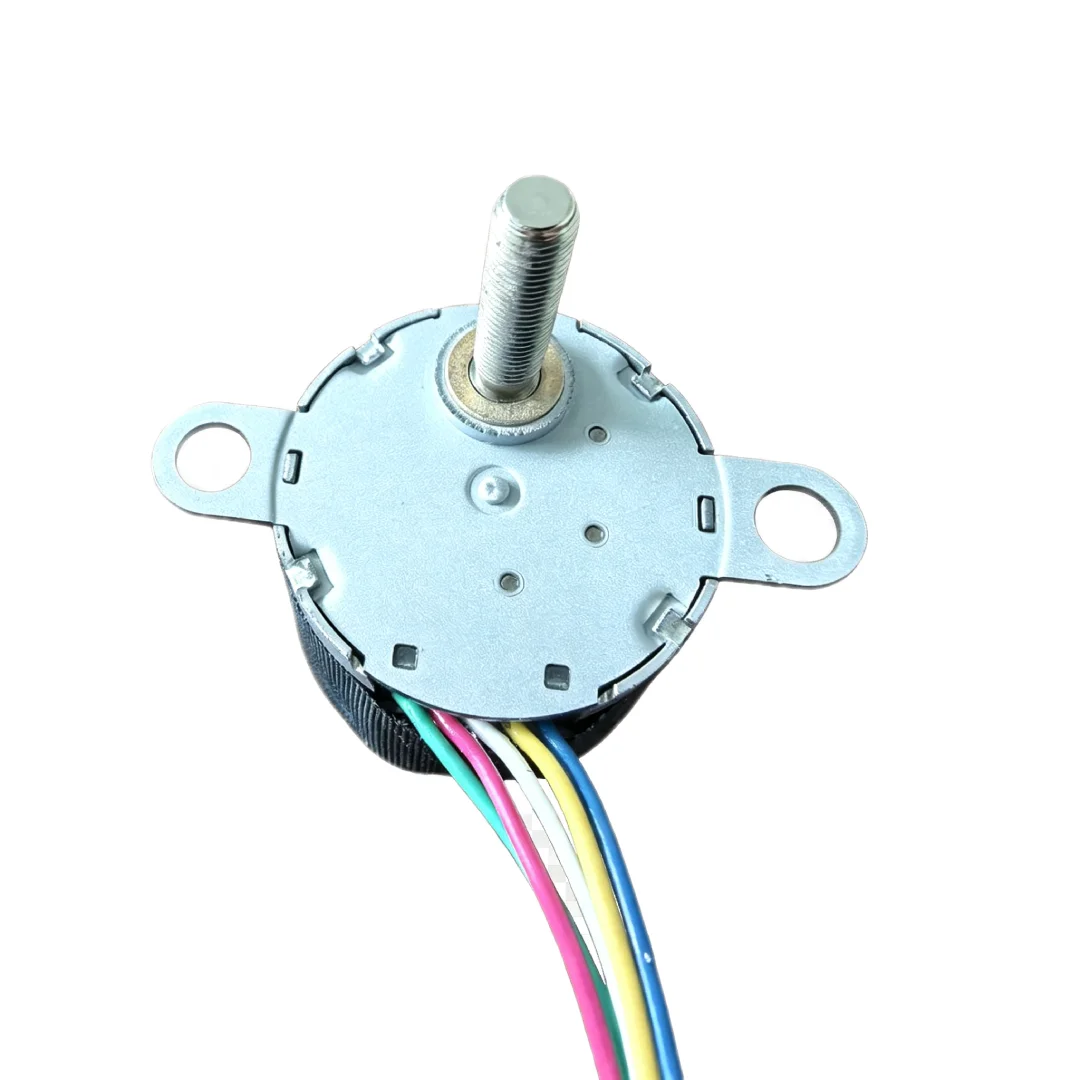
For a replacement project, the model number or label photo is the fastest route to a match — and the most common gap in a stepper motor RFQ. This matters in practice: BYJ stepper motors, for example, exist in many models, each with its own size, electrical specification and output configuration, so the exact designation saves time on both sides.
Identification evidence | What it lets the supplier confirm | Limitation |
Model number | Exact variant, series and catalogue data | Only if the number is complete and current |
Label photo | Model, ratings and sometimes batch or date code | Unreadable or partial labels need retakes |
Photos of shaft, connector, mounting points | Product type and mechanical arrangement | No tolerances, no measurement points |
Dimensional drawing | Sizes and tolerances for a fit check | May not exist for older equipment |
Original datasheet | Electrical and performance baseline | Outdated revisions can mislead |
When you photograph a motor, cover the shaft, the connector, the mounting locations and the label. Photos help the supplier identify the product type, but they do not carry enough detail to replace a full technical specification.
5. Which Electrical Requirements Does the Supplier Need?
In short: voltage, current, phase and winding data, wiring details and driver requirements define electrical compatibility — and when you are replacing a motor, the old datasheet is the most useful document you can send.
Prepare the following details where they are available:
- Rated voltage of the motor.
- Rated current.
- Number of phases or winding configuration.
- Resistance per phase.
- Wiring or connector information.
- Driver requirements, including how the motor will be driven.
Driver pulse frequency (Hz) = speed (rpm) × steps per revolution ÷ 60. Example: 300 rpm with 200 steps/rev → 1,000 Hz, the figure to quote when you describe driver requirements.
The motor must work with the electrical system already in your equipment. Send the original datasheet or the electrical label of the old motor if you are replacing a unit, and state your power supply and control requirements for a new design.
If you do not know an exact electrical value, say so in the RFQ and ask the supplier to confirm it for the specific motor being considered — an omitted value is easier to handle than a wrong one.
6. Which Mechanical Details Decide Whether the Motor Fits?
In short: dimensions decide installation, so a stepper motor RFQ without mechanical data is only half a request — one dimensional drawing is worth more than any written description of size.
Mechanical dimensions determine whether a motor can fit into your equipment. The supplier needs the following to check a fit before quoting:
Mechanical item | Why the supplier needs it | Best way to provide it |
Motor diameter and length | Space envelope inside the machine | Measured values plus drawing |
Shaft diameter and length | Coupling to pulleys, gears or lead screws | Drawing with tolerance class |
Mounting hole positions | Bolt pattern and pilot fit | Drawing or measured hole spacing |
Gearbox dimensions | Adds length and changes output behaviour | Drawing of the geared unit |
Output shaft structure | Defines how the driven part attaches | Photo plus sketch |
Available installation space | Clearance for cables and connectors | Machine layout or enclosure drawing |
A technical drawing is especially useful. If none exists, provide accurate measurements and high-quality photos, and describe how the motor will connect to the driven part of the machine. This information minimizes installation and development problems later.
State the unit system with every measurement. A shaft dimension quoted as 0.25 means nothing until the supplier knows whether it is 0.25 mm or 0.25 in — and mixing the two systems is one of the most common causes of a motor that does not fit.
7. How Do You Specify Performance Without Exact Numbers?
In short: describe speed, torque, motion pattern, operating time and load; if a number is unknown, describe the application and let the supplier size the motor instead of guessing.
A motor should match the actual operating conditions of the equipment. Answer the questions below as far as you can:
Performance parameter | Question to answer in the RFQ | If you do not know |
Speed | What operating speed does the application require? | Describe the movement and cycle time |
Torque | How much torque must the motor deliver? | State the load and how it is driven |
Motion | Continuous, intermittent, or repeated positioning? | Describe one complete work cycle |
Operating time | How many hours per day does the equipment run? | Give the duty pattern instead |
Load | What kind of mechanical load does the motor drive? | Send a photo or sketch of the mechanism |
Torque unit check: 1 N·m ≈ 141.6 oz·in ≈ 8.85 lb·in. State the unit next to every torque figure in the RFQ so the supplier cannot misread the requirement.
If torque or speed is still unclear, explain the application and the load first. A supplier will usually ask one or two follow-up questions and then propose a model, which is faster than choosing a motor by appearance.
8. What Environmental and Purchasing Data Completes the RFQ?
In short: environment — indoor or outdoor use, temperature, humidity, dust, start-stop pattern and duty cycle — plus purchasing data such as quantity, samples, annual demand and schedule complete the request.
The operating environment affects motor selection and service life. State whether the motor is for indoor or outdoor use, and note any unusual conditions such as high temperature, humidity or dust, plus operating patterns like frequent start-stop. For equipment that runs continuously, include the expected duty cycle.
Do not expect every motor to share the same temperature range or environmental protection; check the product specifications rather than assuming.
Technical specifications are only one part of a stepper motor RFQ — purchasing data is equally important. Include:
- Estimated order quantity.
- Sample quantity, if samples are needed.
- Expected annual demand.
- Target delivery schedule.
- Destination country.
- Whether samples are required for testing before approval.
For regular purchases, explain the estimated demand. For a new project the exact quantity may be unknown, so give your best estimate and mark it as an evaluation figure — clear purchasing details make the next discussion far more efficient.
9. Which Documents Should You Prepare Before Sending the RFQ?
In short: prepare what already exists — photos, datasheets, drawings, wiring diagrams, installation drawings, performance notes and reference models — and send the first inquiry with that set; a stepper motor RFQ that arrives with documents is answered faster.
Supporting documents make communication considerably easier. Consider preparing:
- Motor product photos.
- Existing motor datasheets.
- Mechanical drawings.
- Wiring diagrams.
- Equipment installation drawings.
- Performance requirements.
- Reference model numbers.
9.1 How Much Detail Is Enough for a First Inquiry?
In short: enough for the supplier to identify the product family and understand the application — you do not need every document before the first message.
Begin with what you know; the supplier will then tell you which additional data is required. For motor sizing questions, manufacturer-published sizing guides are a useful reference, and a supplier can point you to the right section for your application (see Appendix B).
Send one well-organized message rather than several fragments. A single request with labelled photos and a short list of unknowns gives the supplier a complete picture, and the reply usually covers every point at once instead of returning a question per email.
10. FAQ
Can I request a quotation without knowing the motor model?
Yes. Explain the application, send images, measurements and power requirements. The supplier may need a few more details before recommending a model.
What if I only have a sample motor?
Send clear, high-resolution photos of the unit and its label, plus its dimensions. The original datasheet, if available, helps the supplier identify what makes the product specific.
Do I need to provide a technical drawing?
Not necessarily. Photos and measurements can start the process, but a drawing helps most when installation space is critical.
Should I request samples before placing a bulk order?
Yes, in the early stages. Sample testing shows whether the motor suits the application and performs under real conditions before you commit to volume.
What should I do if I do not know the required torque?
Describe the load, movement, speed and site conditions. The supplier can then say which additional data is needed for an assessment.
How long should a stepper motor RFQ be?
As long as it takes to answer the eight points in this checklist — often one page. A short stepper motor RFQ that covers all eight points is more useful than a long one that leaves gaps.
11. Conclusion
A clear stepper motor RFQ helps buyers and motor suppliers communicate more efficiently. Before requesting a quote, prepare the application description, the motor model, the electrical requirements, the mechanical dimensions, the performance targets, the operating environment, the quantity to be purchased and any supporting documentation.
You do not need to understand every technical aspect at the start. Begin with what you know and ask the supplier to clarify the details that are still open — that is a normal part of the process, not a sign of an unprepared buyer.
Changzhou Xinghua Electric Co., Ltd. provides stepper motor product information to customers worldwide. To review the range of BYJ stepper motors, including geared types in frame sizes such as Φ15–Φ46, visit czxhmotor.com, or send your RFQ to the company’s staff and describe how the motor will be used.