
 What Is a Stepper Motor?
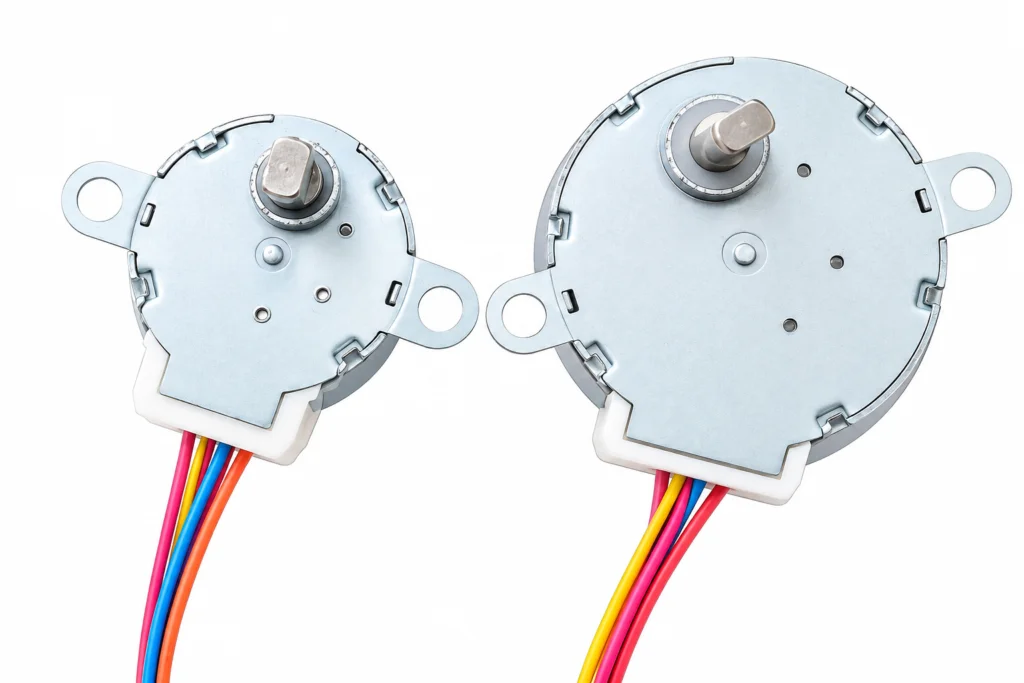
A stepper motor is an electromechanical device that converts electrical pulses into discrete mechanical movements. Unlike standard electric motors that rotate continuously, a stepper motor for air conditioner applications rotates in precise increments (steps), allowing control systems to determine exact shaft position through pulse counting.
Key Characteristics of Stepper Motors:
Stepper motors offer several advantages for HVAC applications:
- Controlled incremental rotation: The motor moves in fixed angular steps, enabling precise position control
- Repeatable positioning: Under suitable operating conditions, the motor returns to the same position consistently
- Electronic compatibility: Works seamlessly with digital control systems and microcontrollers
- Torque and speed flexibility: Available in various configurations to match different load requirements
- Size versatility: Ranges from compact NEMA sizes to larger industrial formats
Many stepper motor for air conditioner designs incorporate gearboxes to increase output torque while reducing rotational speed. This configuration effectively amplifies the force available to drive mechanical components through their required travel distance.
Where Are Stepper Motors Used in Air Conditioners?
Air conditioning systems utilize motors to control the movement and positioning of various mechanical components. A stepper motor for air conditioner applications is specifically chosen when precise positional control is required rather than continuous rotation.
Air Louver Control
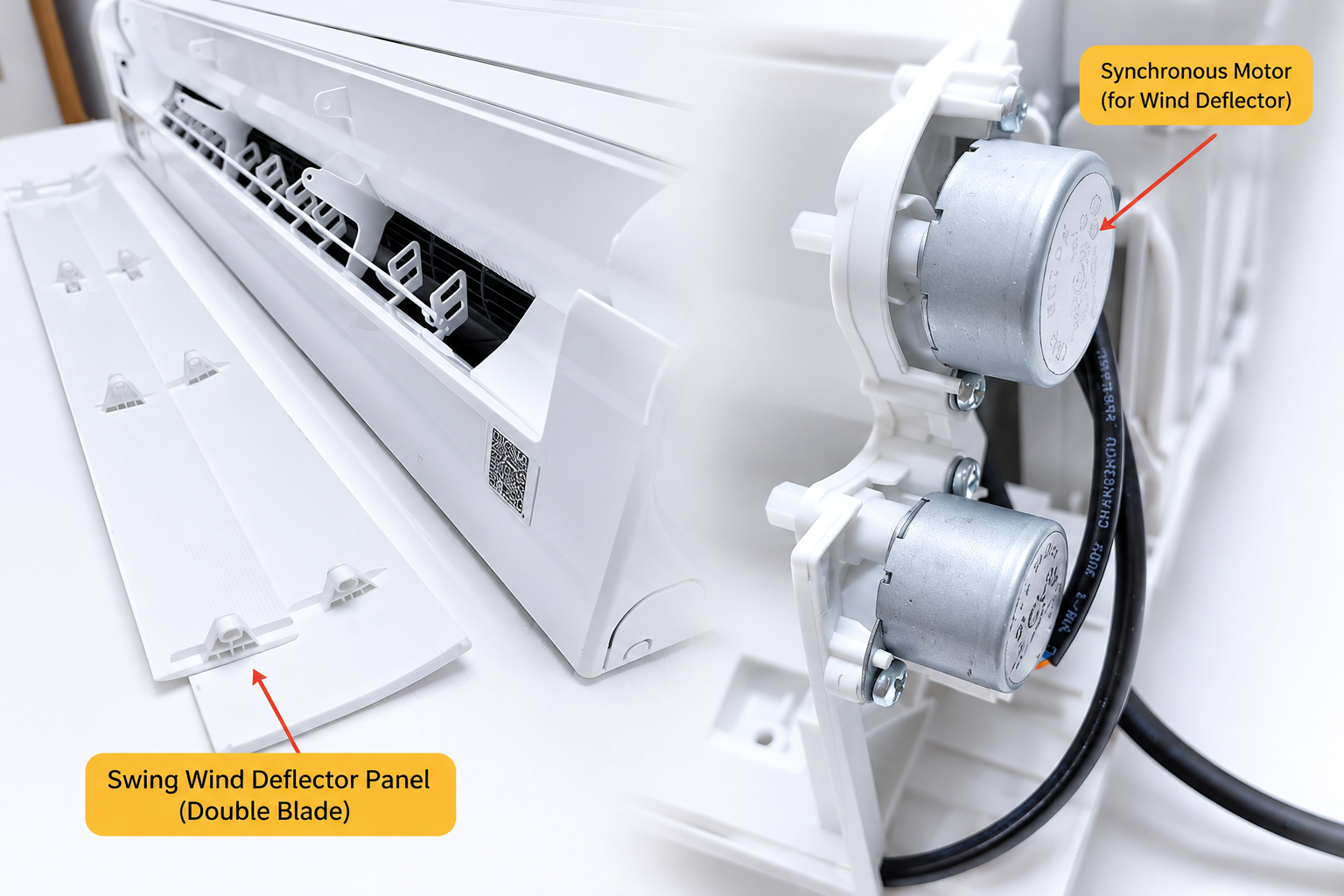
The most common application involves controlling horizontal or vertical air louvers within indoor units. Louvers are adjustable panels that direct airflow to specific areas within a space. A motorized system positions these panels based on user input or automatic programming.
Depending on the equipment design, the stepper motor for air conditioner louver control may:
- Directly connect to the louver shaft
- Operate through a gearbox reduction system
- Use linkage mechanisms to transfer motion
Airflow Direction Adjustment
Modern air conditioning systems allow users to modify airflow patterns via remote controls or wall-mounted panels. The motorized mechanism positions airflow vanes to the desired location. In automatic swing modes, the stepper motor for air conditioner vanes continually adjusts within a predetermined arc to distribute air evenly.
The choice between stepper motors, synchronous motors, or DC motors depends on:
- Required positioning accuracy
- Control method complexity
- Cost constraints
- Noise requirements
Automatic Airflow Mechanisms
Advanced air conditioning products include automatic airflow functions that redirect air based on operational settings such as cooling mode, fan speed, or temperature differential. An electronically powered stepper motor for air conditioner automation assists with moving the appropriate components to achieve optimal air distribution.
When developing these applications, engineers must consider the motor, gearbox, mechanical connections, control system, and position feedback methods as an integrated unit rather than isolated components.
Other Motorized Components
Beyond primary airflow control, air conditioning units may include additional stepper motor for air conditioner applications:
- Air distribution mechanisms in multi-zone systems
- Adjustable internal panels for mode switching (cooling/heating/dehumidifying)
- Mechanical positioning systems for variable airflow vents
- Small auxiliary drive mechanisms for damper control
Not all these functions require stepper motors. Motor selection depends on required motion profile, load characteristics, operating environment, and control methodology.
How Does a Stepper Motor Control Airflow Direction?
A stepper motor for air conditioner airflow control operates through a mechanical transmission system that converts rotational motion into linear or angular louver movement. Understanding this process helps engineers design more effective HVAC systems.
Operating Process Step-by-Step:
- Step 1: User selects airflow setting – User chooses desired direction or activates auto-swing via remote, panel, or smart device
- Step 2: Control system processes input – The AC control board interprets the command and calculates target position
- Step 3: Electrical signals transmitted – Control board sends pulse signals to the motor driver circuit
- Step 4: Motor rotates – The stepper motor for air conditioner responds by rotating the specified number of steps
- Step 5: Mechanical linkage moves – Motor shaft turns gearbox, drive screw, or linkage assembly
- Step 6: Airflow direction changes – Louver reaches final position, altering air path into conditioned space
Most modern units use either open-loop stepper motor for air conditioner control (assuming position based on step count) or closed-loop systems with position sensors that verify actual louver location.
Why Are Stepper Motors Important in Air Conditioning Systems?
Motor selection directly impacts product performance, noise levels, operational lifespan, and user satisfaction. Several factors make controlled motor movement critical in HVAC applications.
Accurate Positioning
Air louvers must move to precise positions to direct airflow effectively. A stepper motor for air conditioner positioning provides:
- Incremental movement control (typically 1.8° or 0.9° per step)
- Position repeatability when operated within specified torque limits
- Hold torque capability to maintain position against air pressure loads
- Elimination of mechanical end-stop dependency in many designs
Smooth Mechanical Movement
The motor must operate harmoniously with gearbox and mechanical components to ensure proper louver function. Poor matching between the stepper motor for air conditioner and transmission system can cause:
- Visible vibration during operation
- Jerky or uneven louver movement
- Excessive mechanical noise
- Premature wear on linkage components
Low Noise Requirements
Air conditioning units typically operate in bedrooms, offices, and other noise-sensitive environments. Motor noise in a stepper motor for air conditioner system originates from multiple sources:
- Electromagnetic vibration from current switching in windings
- Gearbox noise from gear tooth meshing
- Mechanical friction from bearing wear or linkage binding
- Loose connections or inadequate mounting torque
- Housing resonance from natural frequency excitation
Evaluating low-noise capabilities requires system-level testing rather than isolated motor assessment.
Reliable Repeated Operation
Air louvers may cycle hundreds of times daily during normal use. The stepper motor for air conditioner design must account for daily operation cycles, load variations, temperature extremes, and expected product lifespan (often 10+ years for residential HVAC).
Key Requirements for Air Conditioner Motors
Selecting an appropriate stepper motor for air conditioner applications requires comprehensive evaluation beyond voltage and physical size.
Torque
Torque represents the rotational force a motor produces. For stepper motor for air conditioner selection, engineers must consider:
- Mechanical load weight and inertia
- Gearbox transmission ratio and efficiency
- Friction throughout the mechanism (bearings, linkages, guides)
- Starting torque requirements (often higher than running torque)
- Resistance from assembly structure deflection
- Air pressure loads on louvers during operation
A motor with insufficient torque may exhibit slow movement, stalling, position errors, or intermittent operation failures.
Speed
Required stepper motor for air conditioner speed depends on how quickly the air louver must reposition. Typical requirement is 1-3 seconds for full sweep in most consumer applications. Low-speed control is often more important than maximum speed capability. When gearboxes are utilized, both output speed and output torque at the louver shaft require simultaneous assessment.
Operating Voltage
The stepper motor for air conditioner rated voltage must match the equipment’s electrical design. Considerations include available power supply voltage (typically 5V, 12V, or 24V DC), driver circuit type and current requirements, power consumption budget, operating voltage tolerance (±10% typical), and voltage drop under load conditions.
Size and Installation Dimensions
Air conditioners often have constrained internal installation spaces. Critical stepper motor for air conditioner dimensions include motor body length, diameter, output shaft dimensions, mounting hole positions, gearbox dimensions, and connector location. Engineers must verify mechanical compatibility before finalizing selection.
Noise and Vibration
Noise requirements should be addressed early in the design process. Target noise levels typically range from 30-45 dB(A) at 1 meter distance for residential applications. Complete assembly testing is recommended when low-noise performance is critical.
Service Life and Durability
Air conditioning systems operate continuously for extended periods and experience numerous motor cycles. Testing must represent real-world application conditions rather than relying on generic manufacturer life ratings.
How to Select a Applications
Successful stepper motor for air conditioner selection requires collaboration between motor suppliers and equipment manufacturers. The following systematic process helps engineers define and validate requirements.
Step 1: Identify the Required Movement
Determine what the motor needs to move – horizontal louver, vertical vane, or other mechanical component? What is the required angle of travel (typically 60-120°)? What is the acceptable positioning tolerance (±1-3° common)?
Step 2: Confirm the Required Torque
Estimate the load the motor must drive including weight and inertia of moving parts, mechanical friction, gearbox efficiency (typically 50-80% for planetary gears), and potential resistance. Select a stepper motor for air conditioner providing 20-40% torque margin above calculated requirements.
Step 3: Determine the Required Speed
Define mechanism movement speed and match motor speed and gearbox ratio to required output motion profile.
Step 4: Check Electrical Requirements
Verify complete electrical specification including operating voltage, current consumption, driver type compatibility, control signal requirements, and EMC requirements.
Step 5: Confirm Installation Dimensions
Verify mechanical interface compatibility including mounting frame pattern, shaft dimensions, gearbox size, clearance for motion, and connector location.
Step 6: Evaluate Noise and Durability
Test the motor with actual mechanical assembly, measuring noise level, assessing vibration, verifying positioning consistency, and evaluating long-term performance.
Step 7: Request Samples and Conduct Testing
Before mass production, test stepper motor for air conditioner samples including torque verification, speed profiling, noise measurement, installation fitment validation, and extended cycle testing (minimum 10,000 cycles recommended).
Common Problems in Air Conditioner Motor Applications
Inappropriate stepper motor for air conditioner selection can cause various field issues.
Insufficient Torque
Symptoms: Louver operates slowly, stalls unexpectedly, or fails to reach desired position.
Solution: Re-measure physical load, verify gearbox ratio, evaluate friction sources, confirm motor torque output meets requirements with adequate margin.
Excessive Noise
Symptoms: Audible whining, clicking, grinding, or humming during operation.
Mitigation: Evaluate complete assembly, improve mounting security, verify alignment, consider microstepping drive, add damping materials.
Inconsistent Positioning
Symptoms: Fails to reach intended destination, position drift, or non-repeatable stop points.
Actions: Evaluate control algorithm, assess reference positioning method, verify loading conditions, investigate missed-step possibility.
Installation Problems
Symptoms: Acceptable electrical performance but cannot be properly integrated.
Prevention: Confirm all mechanical dimensions before finalizing selection, review 3D CAD models with supplier, request prototype samples early.
Short Service Life
Symptoms: Motor fails prematurely, exhibits increasing noise, or loses torque over time.
Recommendations: Define realistic operating cycles, perform application-specific durability testing, specify environmental sealing if needed.
How to Choose a Reliable Motor Manufacturer
Selecting the right stepper motor for air conditioner manufacturer significantly impacts product development success and long-term reliability.
Product Range
Evaluate whether the company offers motor types matching your application requirements including stepper motors in various sizes, geared stepper motors, synchronous motors, DC motors, and custom configurations.
Technical Support
A capable supplier should provide expertise on:
- Rated voltage and current requirements
- Torque-speed characteristics
- Dimensional compatibility
- Shaft configuration options
- Gearbox selection
- Operating condition specifications
- EMC compliance support
Customization Capabilities
Many designs require customized solutions including:
- Custom shaft dimensions
- Non-standard mounting patterns
- Specific gearbox ratios
- Special winding configurations
- Unique connector types
- Private labeling options
Sample Testing
Request samples before mass production to verify mechanical fitment, electrical compatibility, noise levels, performance across operating range, and repeated cycle reliability.
Consistent Quality
For OEM manufacturers, consistent quality is essential. Review quality management system certifications, understand inspection procedures, evaluate process control methods, request quality data from similar applications, and check traceability practices.
Choosing Changzhou Xinghua Electric as Your Motor Supplier
Changzhou Xinghua Electric Import and Export Co., Ltd. (https://czxhmotor.com/) specializes in providing high-quality stepper motor for air conditioner applications to global HVAC manufacturers. With extensive experience in motor design, customization, and technical support, Changzhou Xinghua Electric helps equipment manufacturers identify optimal motor solutions for their specific requirements.
Changzhou Xinghua Electric offers:
- Comprehensive product range including stepper motors, geared motors, and custom configurations
- Engineering support for motor selection, integration, and optimization
- Sample testing programs to validate fitment and performance before production
- Quality assurance processes ensuring consistent product reliability
- Flexible customization options for unique application needs
For stepper motor for air conditioner development projects, contact Changzhou Xinghua Electric ‘s engineering team to discuss your requirements and explore available solutions.
Frequently Asked Questions
Are stepper motors used in all air conditioners?
No, not all air conditioning units use stepper motors. Motor type selection depends on the specific component being driven, required positioning accuracy, control method complexity, and cost targets. Some applications use synchronous motors for simple oscillating motion, DC motors for continuous rotation, or other drive types. Stepper motor for air conditioner applications are typically chosen when precise positional control is required.
What does a stepper motor actually do in an air conditioner?
A stepper motor for air conditioner converts electronic control signals into precise rotational movement. This rotation typically drives a gearbox or mechanical linkage that positions air louvers, airflow vanes, or adjustable panels to direct air where it is needed. Unlike continuous-rotation motors, stepper motors move in discrete steps.
How do I know if my application needs a stepper motor versus another motor type?
Consider a stepper motor for air conditioner when your application requires precise positional control with repeatability better than ±3°, ability to hold position against load without mechanical brakes, compatibility with digital control systems, or programmable multi-position operation.
Why is torque specification critical for air conditioner motor selection?
Torque determines whether the stepper motor for air conditioner can reliably move the attached mechanical components against all expected loads. Insufficient torque causes slow movement, stalling, missed steps, or failure to reach target positions. Engineers should select motors with 20-40% torque margin above calculated requirements.
Can geared stepper motors be used for air louver control?
Yes, geared stepper motor for air conditioner designs are commonly used when the application requires low-speed, high-torque output. Critical evaluation points include verifying smooth operation without resonance, confirming noise levels meet requirements, and ensuring gearbox rated torque exceeds maximum load with adequate margin.
What information should I prepare when requesting a stepper motor quotation?
Provide: voltage availability, required torque at louver shaft, speed or positioning time requirements, mounting space limitations with drawings, output shaft configuration, total angle of travel, control signal type, estimated annual volume, and target unit cost. Photos or drawings help suppliers evaluate accurately.
How can I reduce motor noise in my air conditioning system?
Reducing stepper motor for air conditioner noise requires system-level approach: select motors designed for low-noise operation, use microstepping drivers, choose high-quality gearboxes, ensure rigid mounting, minimize friction, add damping materials, avoid resonant speeds, and conduct complete assembly testing.
What is the typical service life of a stepper motor in air conditioner applications?
Stepper motor for air conditioner service life varies based on application severity, but well-designed systems typically achieve 10-15 years of residential use or 50,000-200,000+ operating cycles. Key factors include duty cycle, load level, temperature range, environmental conditions, and mechanical alignment quality.
Conclusion
Selecting the right stepper motor for air conditioner applications requires comprehensive understanding of mechanical design requirements, torque and speed specifications, electrical compatibility, physical dimensions, noise constraints, and expected service life. Stepper motors provide precise positional control essential for modern airflow direction systems, but successful integration demands careful evaluation of the complete motor-gearbox-linkage-control system as an integrated unit.
Key takeaways for engineers and product developers:
- Define requirements completely before contacting suppliers – document torque, speed, voltage, dimensions, environmental conditions, and lifecycle expectations
- Collaborate with experienced motor manufacturers like Changzhou Xinghua Electric Import and Export Co., Ltd. who can provide application-specific guidance
- Test thoroughly using production-intent components under realistic operating conditions before finalizing design
- Evaluate system-level performance, not just individual motor specifications
- Plan for manufacturing variance by including adequate margins in specifications
When developing air conditioning systems that require precise motor-controlled positioning, prepare complete technical specifications and engage with your stepper motor for air conditioner supplier early in the design process. For assistance with selection, customization, or testing, contact the engineering team at Changzhou Xinghua Electric https://czxhmotor.com/ to discuss your requirements.