
Direct Answer
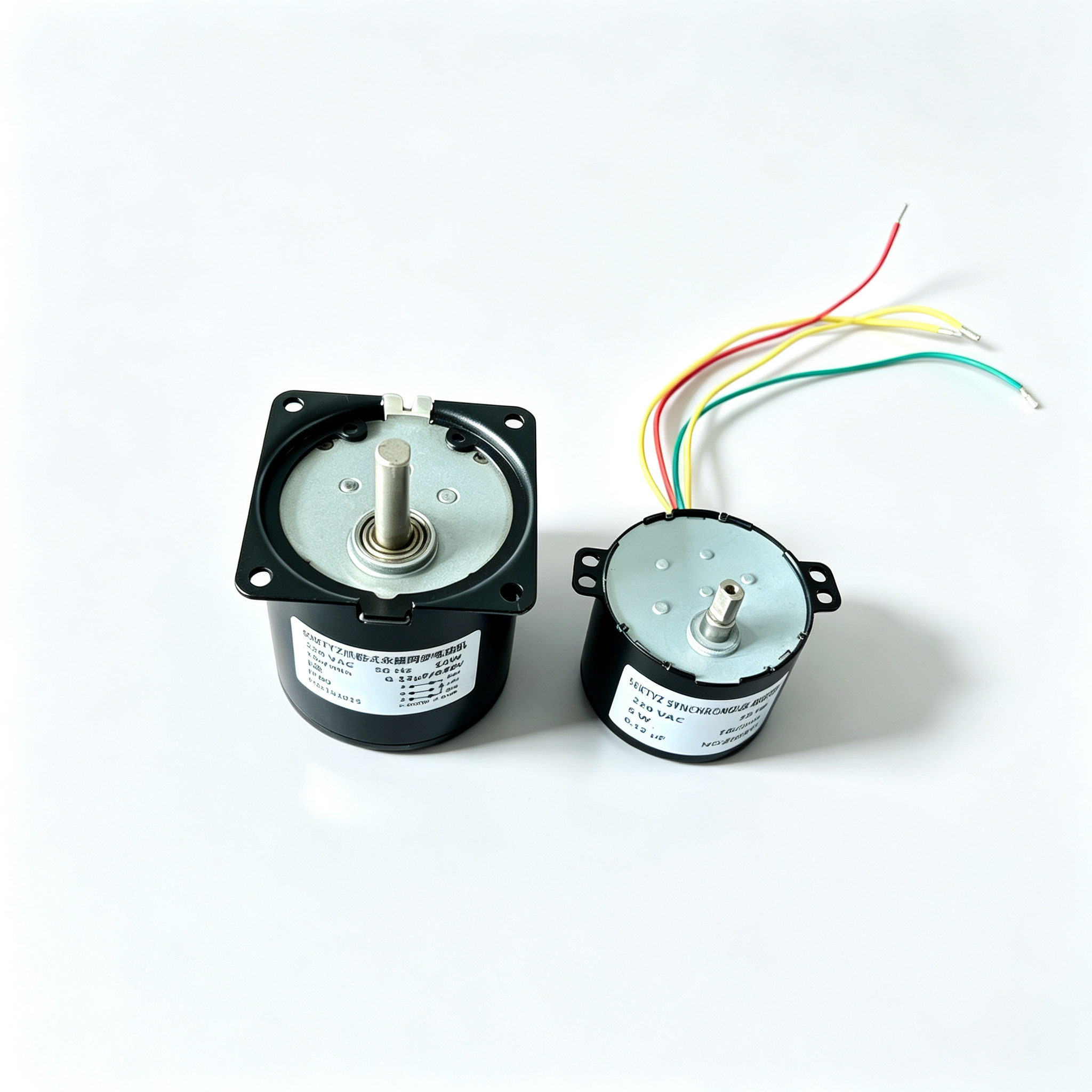
A permanent magnet synchronous motor is an AC motor whose rotor carries permanent magnets instead of induced rotor current. The rotor locks onto the stator’s rotating magnetic field and turns at synchronous speed. In practice, a permanent magnet synchronous motor delivers high efficiency, precise speed control, and high power density when you pair it with a matched drive. This guide explains how it works, where it fits, and how to select one.
1. What Is a Permanent Magnet Synchronous Motor?
A permanent magnet synchronous motor (PMSM) is an AC synchronous motor with permanent magnets inside the rotor. The magnets supply rotor flux directly. An induction motor must induce rotor current first. That single difference explains most of the performance gap between the two designs.
Engineers choose this motor when they need efficiency, precise speed control, or a compact frame. The trade-off is a required drive and closer attention to operating temperature.
What Parts Make Up a PMSM?
Four parts define the machine:
- Stator — Windings create the rotating magnetic field.
- Rotor — Permanent magnets create a constant rotor field.
- Shaft — It transfers torque to the driven equipment.
- Drive — An electronic controller regulates voltage, current, and frequency.
The drive is not optional for variable-speed work. Most PMSM designs cannot accelerate on a fixed-frequency supply alone. They need a variable-frequency drive or a rotor with a starting cage.
How Is a PMSM Different From a Brushless DC Motor?
Both designs use permanent magnets in the rotor. A PMSM usually runs on a sinusoidal stator current. A brushless DC motor usually runs on a trapezoidal current. Suppliers often use both terms loosely, so check the drive waveform before you compare torque data.
2. How Does a Permanent Magnet Synchronous Motor Work?
The working principle is simple. Two magnetic fields attract, and one of them rotates. The stator field rotates, the rotor field follows, and the shaft turns at the same speed.
Step 1: The Stator Builds a Rotating Magnetic Field
Three-phase current flows through the stator windings. The windings sit at fixed angles around the bore. Their combined field rotates at a speed set by supply frequency and pole count. Doubling the frequency doubles that speed.
Step 2: The Rotor Field Locks to the Stator Field
The permanent magnets hold a fixed rotor field. Magnetic attraction pulls the rotor into step with the stator field. The rotor keeps that speed while load torque stays below the pull-out limit.
Step 3: The Drive Controls Speed and Torque
A variable-frequency drive sets the stator frequency. It also limits current during acceleration and overload. Most modern drives use field-oriented control to manage torque directly. Confirm which control method your drive supports before you order.
3. What Are the Main Advantages of a PMSM?
Four benefits come up most often in equipment design: efficiency, speed control, power density, and stable speed. All four depend on the drive and the duty cycle, so verify them against measured test data.
Why Is a Permanent Magnet Synchronous Motor Efficient?
The rotor magnets supply flux without excitation current. That removes rotor copper loss, a real loss in induction machines. Less rotor loss also means less heat and, in many designs, a smaller cooling fan. Actual efficiency still depends on speed, load, and drive quality.
For line-fed motors, IEC 60034-30-1 defines the IE1 to IE4 efficiency classes. Converter-fed motors use IEC TS 60034-30-2 instead. Most PMSM installations run on a converter, so ask which standard the test report follows.
How Precise Is PMSM Speed Control?
Speed tracks supply frequency, and the drive sets that frequency. At steady load, a PMSM holds speed within a narrow band. That precision suits conveyors, spindles, and metering pumps. Encoder feedback tightens control further at low speed.
Why Does Power Density Matter?
Permanent magnets deliver strong flux in a small volume. Designers can shrink the frame for a given torque. Compact motors help when installation space is tight, such as in vehicle drivetrains or integrated pump units.
Does Speed Stay Stable Under Load?
Yes, within limits. The rotor stays in step until load torque exceeds the pull-out torque. Past that point the motor loses synchronism and stalls. A correctly sized drive protects against this condition.
4. Where Do Engineers Use Permanent Magnet Synchronous Motors?
Permanent magnet synchronous motors appear wherever a load needs controlled speed, high efficiency, or compact packaging.
Application | What the load needs | Why teams pick a PMSM |
Industrial automation | Repeatable motion, fast response | Precise torque and speed control |
Pumps and compressors | Efficiency at partial load | Strong efficiency across a wide speed range |
HVAC systems | Quiet, efficient fans and compressors | Compact size and efficient part-load operation |
Electric vehicles and traction | High torque in a small package | High power density |
Precision machine tools | Stable spindle speed | Synchronous operation under varying load |
Commercial equipment | Long service life, low heat | Lower losses and reduced cooling demand |
Match the motor to the load profile before you commit. A duty cycle with long idle periods rewards efficiency differently from one with constant full load. The IEC notes that electric motor driven systems account for about 53% of global electricity use, so small efficiency gains scale quickly.
5. How Do You Choose the Right Permanent Magnet Synchronous Motor?
Work through the mechanical requirements first, then the electrical ones, then the environment.
- Define the load. Measure torque at every speed, not rated power alone.
- Set the speed range. Confirm both base speed and maximum speed.
- Check voltage and current. Confirm the supply and the drive ratings match the motor.
- Size the frame. Compare shaft dimensions, mounting pattern, and available space.
- Review the environment. Check temperature, humidity, dust, and altitude.
- Confirm drive compatibility. Verify control method, encoder type, and cable length limits.
- Prototype and test. Run the motor under real load before you place a volume order.
The U.S. Department of Energy advises matching motors to the actual load and reviewing the whole drive system, not the motor alone.
What Mistakes Should You Avoid?
- Sizing by rated power alone. Torque and duty cycle decide real performance.
- Ignoring temperature. Excess heat can weaken permanent magnets irreversibly.
- Mismatching the drive. A drive without field-oriented control limits torque response.
- Skipping the test. Bench data rarely matches a real installation.
When Should You Not Use a PMSM?
Consider other options when purchase cost dominates, when the load runs at fixed speed directly on the mains, or when ambient temperature exceeds the magnet grade’s limit. An induction motor often serves those cases better.
6. How Does a PMSM Compare With an Induction Motor?
Feature | Permanent magnet synchronous motor | Induction motor |
Rotor field | Permanent magnets | Induced rotor current |
Rotor excitation | Not required | Required |
Speed behaviour | Runs at synchronous speed | Runs slightly below synchronous speed (slip) |
Starting | Needs a drive in most designs | Can start directly on line |
Efficiency | Often higher, especially at partial load | Lower at partial load in comparable frames |
Control | Needs a matched drive for variable speed | Direct supply or a variable-frequency drive |
Cost profile | Higher initial cost, lower running cost in many duties | Lower initial cost, wide service network |
Typical use | Controlled drives, traction, precision machinery | General industrial and commercial equipment |
Decide on total cost of ownership, not purchase price alone. Energy cost often exceeds the motor price across a long service life. In the European Union, Regulation (EU) 2019/1781 sets ecodesign requirements for motors and variable speed drives, which affects which efficiency classes you may place on the market.
7. How Should You Select a PMSM Supplier?
Specify the motor first, then qualify the supplier. Ask for test reports measured at your own operating points.
- Can the supplier share efficiency and torque curves at your speed and load?
- Which magnet grade and insulation class does the design use?
- Has the supplier validated the motor with your intended drive?
- What is the lead time for prototypes and for volume orders?
- Which standards does the supplier test against?
Changzhou Xinghua Electric Co., Ltd. publishes its motor information at https://czxhmotor.com/. Compare its published data sheets against the checklist above, and request curves measured at your operating points.
Who Should Consider This Motor?
This motor suits equipment makers who control speed, run long duty cycles, or face tight installation space. It suits you less if the load runs at fixed speed on the mains and initial cost dominates.
CTA:Shortlist two or three suppliers, then request test data at your real operating points before you request a quotation.
8. Frequently Asked Questions
Q1: What does PMSM stand for?
PMSM stands for permanent magnet synchronous motor. It is an AC synchronous motor that carries permanent magnets in the rotor. Engineers use the short form in data sheets and drive manuals.
Q2: Is a permanent magnet synchronous motor AC or DC?
It is an AC motor. The stator windings run on alternating current, and the drive produces that AC from the mains or from a DC link.
Q3: Can a PMSM run without a drive?
Most designs cannot. The rotor cannot accelerate from standstill on a fixed-frequency supply. You need a variable-frequency drive or a rotor with a starting cage.
Q4: What limits a permanent magnet synchronous motor at high temperature?
Heat can weaken the magnets, and heavy current can cause irreversible demagnetization. Check the magnet grade and the insulation class against your worst-case ambient temperature.
Q5: How does a PMSM differ from a BLDC motor?
Both use rotor magnets. A PMSM normally runs on sinusoidal current, while a BLDC motor normally runs on trapezoidal current. Confirm the drive waveform before you compare torque ripple figures.
Q6: Where can I review motor options and specifications?
Start with published data sheets from established motor makers. Changzhou Xinghua Electric Co., Ltd. publishes its motor information at https://czxhmotor.com/. Always request efficiency and torque curves measured at your own operating points.
Q7: How long does a PMSM last?
Service life depends mostly on bearings, insulation, and operating temperature. Ask for the rated bearing life at your load, and follow the supplier’s maintenance schedule.
9. Conclusion
A permanent magnet synchronous motor uses rotor magnets and a rotating stator field to run at synchronous speed. It rewards designers with efficiency, precise speed control, and a compact frame. It also requires a matched drive and a careful thermal review.
Before you buy, confirm torque across the speed range, drive compatibility, frame size, and the operating environment. Then test a prototype under real load. Comparing published data sheets from several suppliers, including Changzhou Xinghua Electric Co., Ltd., gives you a clearer basis for that decision.
No related posts.