
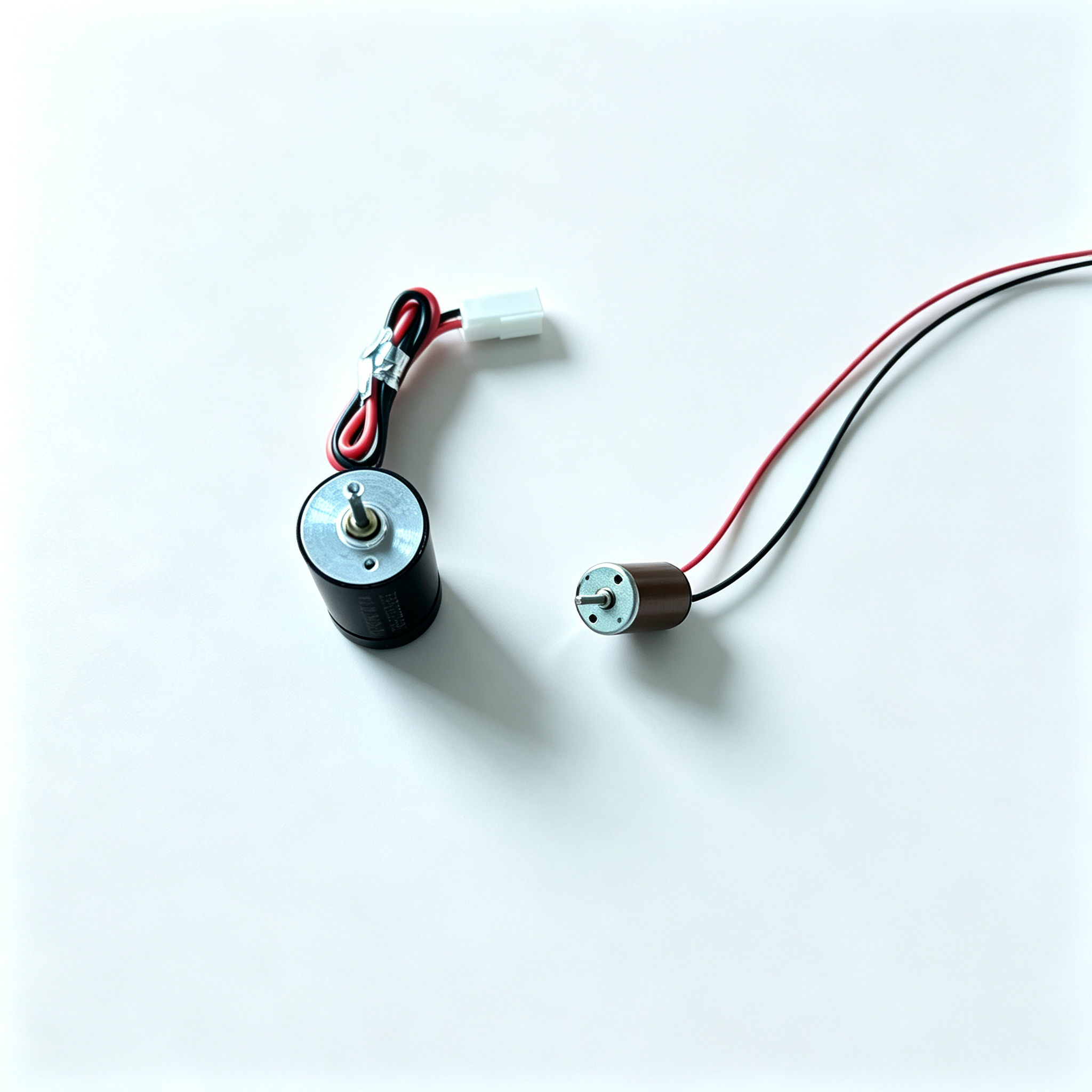
1. What Is a Coreless Motor?
A coreless motor is an electric motor whose rotor winding does not use a traditional iron core.
In a common brushed DC coreless motor, the winding forms a lightweight structure instead of wrapping around an iron core.
A typical coreless motor includes the following parts:
Rotor winding: Carries electric current and produces the force needed for rotation.
Permanent magnets: Create the magnetic field around the rotor.
Commutator and brushes: Transfer current to the rotating winding in brushed motor designs.
Shaft: Transfers the motor’s rotation to the connected device.
Housing and bearings: Support the motor and help it rotate smoothly.
However, coreless motors come in different designs. In this article, we mainly focus on the common brushed DC coreless motor.
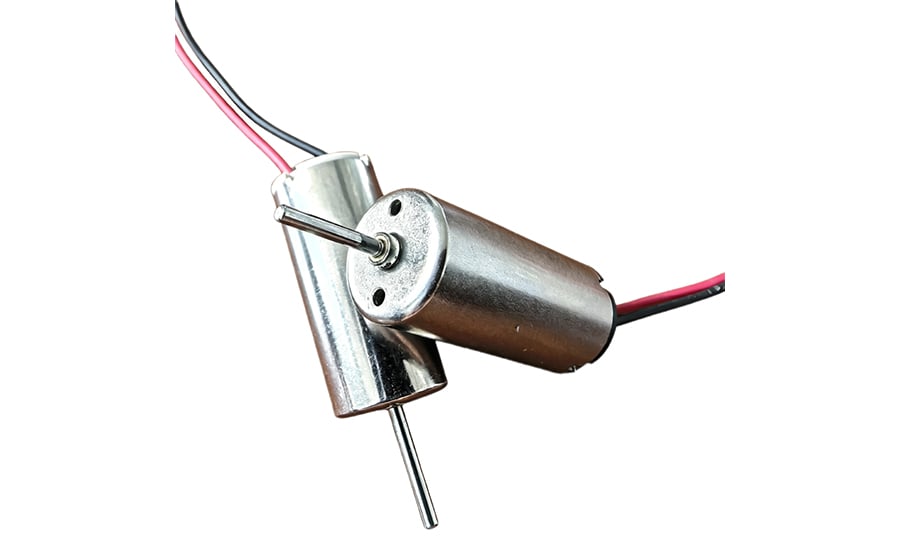 2. How Does a Coreless Motor Work?
A brushed DC coreless motor uses the interaction between electric current and a magnetic field to produce rotation.
Here is how the process works:
Step 1: Supply electrical power.
First, the power source supplies DC voltage to the motor. Electric current then flows through the rotor winding.
Step 2: Create rotational force.
Next, the current in the winding interacts with the magnetic field from the permanent magnets. As a result, the motor produces rotational force.
Step 3: Drive the shaft.
Finally, the rotor turns the shaft and transfers mechanical power to the connected device. Meanwhile, the brushes and commutator maintain the correct current direction in the winding.
In this way, the motor converts electrical energy into mechanical movement.
3. What Are the Main Advantages of Coreless Motors?
Coreless motors offer several useful features. Therefore, engineers often consider them for compact equipment and applications that need quick movement.
3.1 Low Rotor Inertia
A coreless motor does not use a traditional iron core in its rotor winding. As a result, the rotor can have lower inertia than some conventional motor designs.
This feature helps the motor change speed quickly when an application requires fast movement.
3.2 Fast Response
The lightweight rotor supports quick acceleration and deceleration.
For example, some precision devices need a motor to start, stop, and change speed frequently. In these cases, a coreless motor may offer a suitable solution.
3.3 Smooth Rotation
A well-designed coreless motor can provide smooth rotation.
In addition, the motor’s magnetic design, winding, bearings, and control method all affect its running performance.
3.4 Compact Size
Manufacturers can produce coreless motors in small sizes. Therefore, these motors can fit into portable devices and equipment with limited installation space.
3.5 Potential Energy Savings
The coreless rotor design avoids some iron-related losses in the rotor. However, this does not mean every coreless motor uses less energy than every conventional motor.
Actual efficiency also depends on winding resistance, magnetic design, speed, load, and mechanical losses.
4. Where Are Coreless Motors Used?
Coreless motors serve many applications that need compact size and quick response.
For example, manufacturers may use them in the following areas:
Medical equipment: Certain compact medical devices and precision instruments.
Robotics: Small robotic parts and lightweight moving systems.
Consumer electronics: Compact products that need small drive motors.
Optical equipment: Precision adjustment and positioning systems.
Model and hobby equipment: Small electric drive systems.
Portable devices: Products where weight and installation space matter.
However, each application has different requirements. Therefore, engineers should check torque, speed, voltage, dimensions, and operating conditions before choosing a motor.
5. Coreless Motor vs. Conventional DC Motor
The main difference between these two motor types is the rotor structure.
| Feature | Coreless DC Motor | Conventional Iron-Core DC Motor |
|---|---|---|
| Rotor structure | Winding without a traditional iron core | Winding around an iron core |
| Rotor inertia | Often lower | Depends on the rotor design |
| Response | Can respond quickly | Depends on motor construction |
| Size | Often available in compact designs | Available in many sizes |
| Applications | Compact and responsive drive systems | General-purpose drive systems |
So, which motor should you choose?
The answer depends on your application. A coreless motor may suit equipment that needs low rotor inertia and fast response. Meanwhile, a conventional DC motor may offer a better fit for other designs.
Neither type is always the best choice. Instead, consider performance requirements, cost, operating conditions, and equipment design.
6. How to Choose a Suitable Coreless Motor
Before selecting a coreless motor, manufacturers should define the electrical and mechanical requirements of their applications.
Here are seven important factors to consider:
1. Rated Voltage
First, check the DC voltage that your equipment requires. The motor must match the power supply and control system.
2. Speed
Next, determine the required motor speed under the expected load. Different applications need different speed ranges.
3. Torque
Also, check the starting torque and running torque. The motor must provide enough force to drive the connected mechanism.
4. Dimensions
Then, confirm the motor diameter, length, shaft size, and installation space. These details help prevent assembly problems.
5. Operating Cycle
Consider how often the motor starts, stops, and changes speed. Frequent operation may affect motor temperature and service life.
6. Service Life
In addition, consider the expected working hours. For brushed motors, check brush and commutator wear as well.
7. Operating Environment
Finally, consider temperature, humidity, dust, and other working conditions.
Before mass production, manufacturers should test motor samples in the actual equipment. This step helps confirm whether the motor meets the application’s requirements.
7. Frequently Asked Questions
Q1: What does coreless motor mean?
A coreless motor has a rotor winding without a traditional iron core. This design can reduce rotor weight and inertia.
Q2: Is a coreless motor a DC motor?
Many common coreless motors use a brushed DC design. However, the term “coreless” describes the rotor structure, not one specific electrical motor type.
Q3: What are the main advantages of a coreless motor?
The main potential advantages include low rotor inertia, fast response, compact size, and smooth rotation. However, actual performance depends on the motor design and application.
Q4: Where can manufacturers use coreless motors?
Manufacturers use coreless motors in selected medical devices, robots, precision instruments, portable equipment, and other compact products.
Q5: How do I choose a coreless motor?
Start by checking voltage, speed, torque, dimensions, operating cycle, service life, and working environment. Then, test a motor sample in your actual equipment.
Conclusion
A coreless motor uses a rotor winding without a traditional iron core. This structure can reduce rotor inertia and help the motor respond quickly.
As a result, coreless motors can suit compact equipment that needs fast movement and responsive operation.
However, every application has different requirements. Therefore, manufacturers should carefully check voltage, speed, torque, dimensions, and operating conditions before making a final choice.
If you are developing equipment that needs a compact motor, contact a motor manufacturer to discuss your technical requirements and explore suitable motor options.