
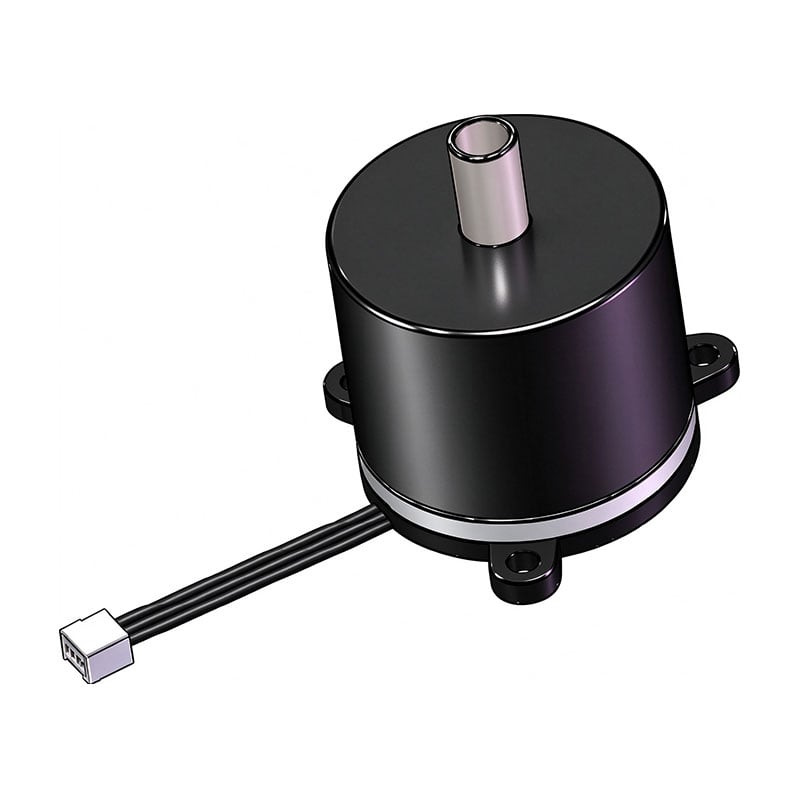
Description
Product Overview
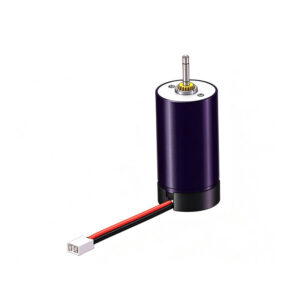
The 30SYWK27D06-W01 uses a brushless operating principle. Electronic switching replaces the brushes and commutator used in a brushed motor, removing those components as sources of mechanical wear.
Its external-rotor construction places the rotating assembly around the stator. This arrangement affects how the motor mounts, how it connects to the load, and how surrounding components require clearance.
The motor and controller must work as a matched system. Electrical characteristics, rotor-position detection, and the intended load determine the appropriate control arrangement.
Key Features
External-Rotor Construction
The outer rotor rotates around the stationary stator. This configuration provides a mechanical option for assemblies that can accommodate an external rotating surface.
Brushless Commutation
A compatible electronic drive switches current through the motor windings. The design eliminates brush and commutator wear, although bearings and other mechanical components still experience wear during operation.
Controller-Based Operation
Suitable control electronics manage starting and running behavior. Available speed regulation, braking, and direction-control functions depend on the selected controller and motor compatibility.
Adaptable Drive Integration
The motor can form part of a larger equipment control system. The supported command interfaces and monitoring functions depend on the complete drive configuration.
Load-Matched Rotary Movement
Controller settings can accommodate the intended movement pattern within the motor’s operating limits. Matching the drive to load inertia and resistance helps establish suitable starting and running performance.
| Parameter | Unit | Specification |
|---|---|---|
| Rated Voltage | V DC | 6 |
| No-Load Speed | rpm | 1100 |
| No-Load Current | A | 0.100 |
| Speed Constant | rpm/V | 183 |
| Rated Torque | mN·m | 5.21 |
| Stall Current | A | 1.30 |
| Stall Torque | mN·m | 67.94 |
| Maximum Efficiency | % | 75 |
| Terminal Resistance | Ω | 4.6 |
| Ambient Temperature | °C | −30 to +60 |
| Maximum Permissible Winding Temperature | °C | +80 |
| Noise Level | dB | ≤45 |
| Parameter | Specification |
|---|---|
| Motor Type | Brushless |
| Bearing Type | Ball Bearings |
| Number of Pole Pairs | 7 |
| Connection Type | Lead Wires |
Potential Applications
Depending on its confirmed specifications and mechanical configuration, the 30SYWK27D06-W01 may suit:
- Air-Moving Assemblies: Driving compatible fan or blower mechanisms.
- Rotating Equipment Components: Providing motion where the external-rotor arrangement suits the assembly.
- Instrument Drives: Operating rotary mechanisms within a matching control system.
- Automation Devices: Supplying movement coordinated with external equipment commands.
- Compact Drive Assemblies: Integrating motor operation into equipment with specific mounting and clearance requirements.
Controller Compatibility
Select a controller that matches the motor’s electrical requirements and commutation method. Confirm whether the selected version uses position sensors or requires sensorless control.
Verify phase connections and any sensor wiring against the applicable connection diagram. The product name alone does not establish connector assignments or controller compatibility.
Starting under load requires particular attention. The controller must establish rotor position and deliver sufficient starting torque without exceeding the motor’s current or thermal limits.
Speed and Direction Control
A compatible drive can regulate speed using its supported control method. Applications requiring consistent speed under changing loads should use a control arrangement suited to that requirement.
Reversible operation depends on the motor, controller, and driven mechanism. Confirm direction-control compatibility before designing a reversing cycle.
Acceleration and braking settings should account for the inertia of the external rotor and connected load. Abrupt changes can increase current demand and mechanical stress.
Mechanical Installation
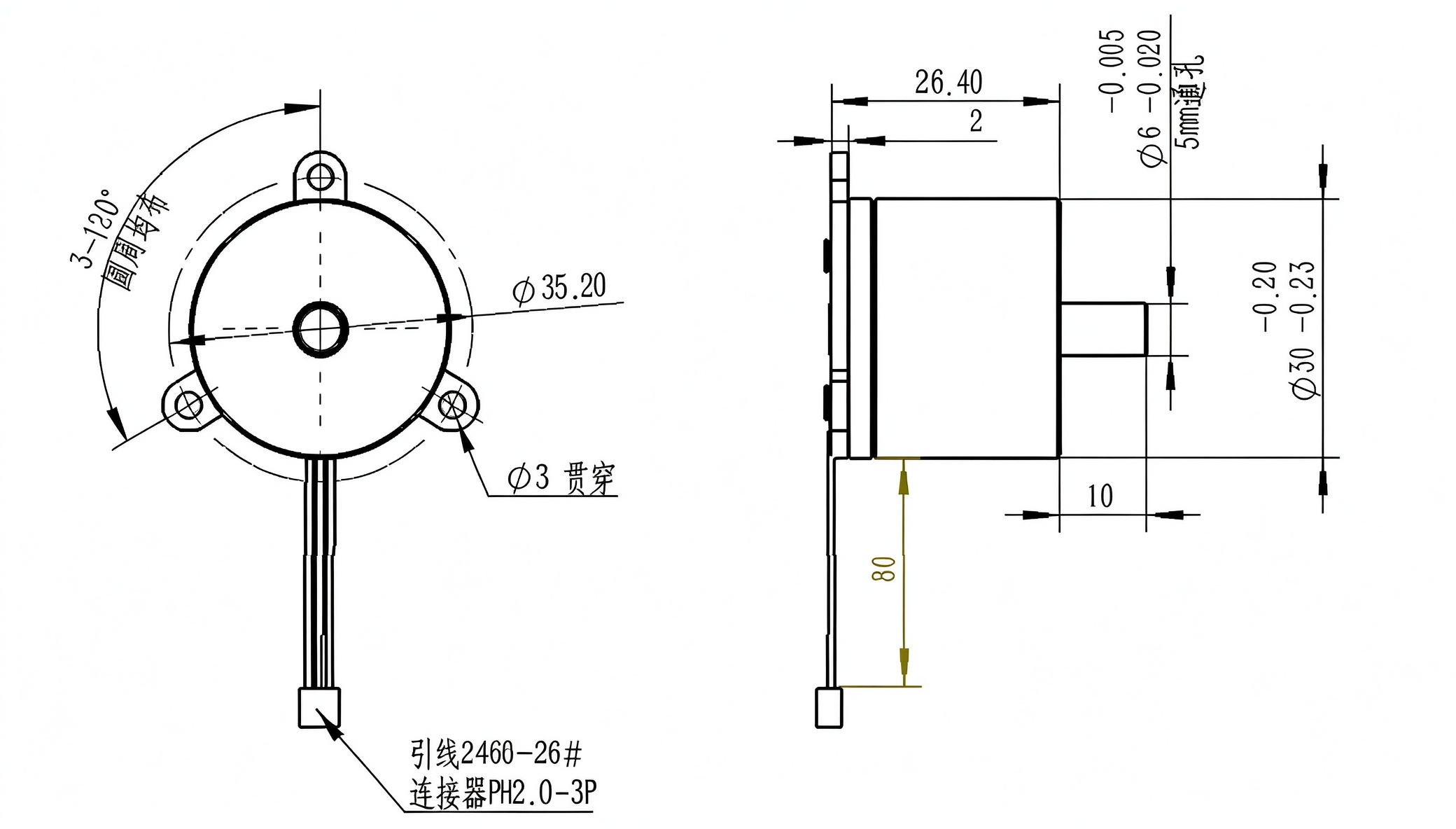
Secure the stationary mounting points according to the product drawing. Maintain adequate clearance around the external rotor throughout its full rotation.
Keep wiring, fasteners, and enclosure components away from rotating surfaces. Avoid mounting forces that could distort the motor or interfere with rotor movement.
Check balance and alignment when attaching a driven component. Provide suitable protection around accessible rotating parts and allow appropriate heat dissipation.
Application Selection
Evaluate the required torque, operating speed, duty cycle, and installation environment together. Include startup resistance, load variation, and the thermal conditions inside the equipment.
Testing the 30SYWK27D06-W01 with the intended controller and load helps assess starting behavior, speed consistency, vibration, and temperature rise. This supports selection of a compatible drive system for the finished assembly.

Reviews
There are no reviews yet.